How to Set Your Airbnb Cleaning Fee Without Scaring Off Guests

Your Airbnb cleaning fee has to do two jobs at once: cover what turnover cleaning actually costs you, and stay low enough that it doesn't push guests toward a competing listing. Here's how to find that number.
Key Takeaways
- The Airbnb cleaning fee is a separate, non-refundable charge that covers turnover cleaning, not a tip and not part of your nightly rate.
- The median cleaning fee for a one-night US stay is around $75, but the right number for your listing depends heavily on bedroom count and property size.
- Most successful hosts keep their cleaning fee between 25% and 50% of their average daily rate, a range linked to meaningfully higher annual revenue.
- A cleaning fee that reads as too high can hurt your Airbnb search ranking and click-through rate, even when your nightly rate is competitive.
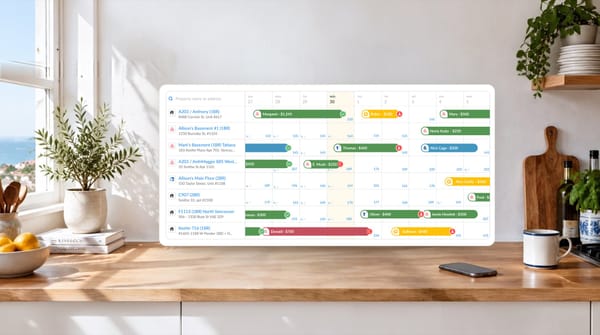
- You can edit your cleaning fee anytime from your Airbnb listing's pricing settings, and iGMS can help you manage the cleaning work behind it.
Cleaning fees are one of the most argued-about numbers in short-term rental hosting. Set yours too low and you're subsidizing your cleaner out of your own margin. Set it too high and Airbnb's own algorithm can start working against you. Below is what the fee actually covers, what hosts typically charge by property size, and a framework for landing on a number that protects both your bookings and your cleaning budget.
What Is an Airbnb Cleaning Fee?
An Airbnb cleaning fee is a one-time, non-refundable charge added to a guest's total booking cost to cover the cost of turnover cleaning after checkout. It's optional, set by the host, and separate from the nightly rate, the security deposit, and Airbnb's own service fee.
Unlike the nightly rate, the cleaning fee doesn't scale with the length of stay. A guest booking one night and a guest booking two weeks both pay the same flat amount on your Airbnb listing, which is part of why the fee can look steep on short bookings.
How Does the Airbnb Cleaning Fee Work?
The cleaning fee is added as its own line item in the total price breakdown guests see before they book. As of 2026, Airbnb displays the full price, cleaning fee included, upfront in search results and on the listing page rather than tacking it on at checkout, so hosts can no longer rely on a low sticker price to win a click and reveal the fee later.
A few things stay constant regardless of how a host prices it:
- It's charged once per reservation, not per night or per guest.
- It's separate from any refundable security deposit.
- It becomes non-refundable once the stay begins, even under flexible cancellation policies.
What Does an Airbnb Cleaning Fee Cover?
The fee is meant to cover the real, recurring cost of turning a property over between guests. That typically includes:
- Deep cleaning of all rooms after checkout
- Changing and laundering linens and towels
- Restocking cleaning supplies, toilet paper, and paper towels
- Washing dishes and clearing out the fridge and cupboards
- The cleaning team's or cleaner's labor time
- General restocking of host-supplied amenities
Some hosts also fold in minor turnover tasks like resetting hot tubs or checking for guest damage, though larger repairs are usually handled separately from the standard cleaning fee. If you'd rather not handle turnover yourself, hiring a professional cleaning team or subcontracting cleaning work to a trusted local provider are both common approaches, and either way, vacation rental cleaning has its own quirks compared to a standard residential clean.
Most hosts land on one of three setups: cleaning it themselves, hiring an independent cleaner, or contracting a cleaning company that sends a rotating team. Professional cleaning services usually cost more per turnover than a solo cleaner, but they're also more reliable when you're managing several listings and can't personally verify every clean. Whichever route you choose, professional cleaners should be working from the same checklist every time, since consistency is what actually protects your reviews.
What Is the Average Airbnb Cleaning Fee?
There isn't one universal number, because cleaning costs scale with property size. A NerdWallet analysis of 1,000 US Airbnb reservations found the median cleaning fee for a one-night stay was $75, with larger, professionally cleaned properties running closer to $105 or more.
More recent bedroom-level data from AirROI's cleaning fee economics analysis shows just how much size moves the number:
Treat these as a starting benchmark, not a rulebook. Your actual cost depends on your market, what local cleaners charge per hour, and how much turnover work your specific property needs. A property with a hot tub, a large outdoor space, or heavy laundry from multiple bedrooms will run above the studio or one-bedroom averages even in the same market, since the crew is on-site longer.
As a short-term rental host, it also helps to know where you sit relative to nearby hotels, since guests unconsciously benchmark your total price against what a local hotel room with daily housekeeping would cost. A cleaning fee that keeps your total price meaningfully below comparable hotel rates in your market gives you room to price with confidence.
Should You Charge a Cleaning Fee on Your Vacation Rental?
There's no requirement to charge one. Whether it makes sense depends on your property type, your competitive set, and what your target guest expects to see.
Adoption varies by market. Airbnb has reported that roughly 45% of listings worldwide skip the cleaning fee entirely, while a NerdWallet analysis of US-only listings found closer to 15% went without one, suggesting US hosts lean toward charging it far more consistently than the global average.
Before deciding, weigh:
- Property type and size. Larger properties and full homes usually justify a fee; a studio or single room sometimes doesn't need one.
- What comparable listings do. If every competing listing in your market charges a fee, an unusually low or missing fee can look like a red flag rather than a bargain.
- Actual cleaning costs. A standard two-hour turnover clean on a one- to two-bedroom property typically runs $40 to $60 in labor, plus $10 to $25 in supplies and restocking.
- Whether it will deter guests. A cleaning fee that's disproportionate to your nightly rate is one of the few line items that can genuinely deter guests at checkout, even after they've already clicked into your listing.
- Target guest. Business travelers and short-stay guests are more fee-sensitive per night than families booking a week-long trip, so it's worth knowing which type of guest you're actually pricing for.
How Much Should You Charge for Your Cleaning Fee?
Start from your actual cost, then adjust against the market. A workable process looks like this:
- Calculate your real cleaning cost. Add labor, supplies, and laundry for a typical turnover.
- Check what comparable listings charge. Look at similar bedroom counts and property types nearby, not just the cheapest option in your market.
- Land in the 25 to 50% of ADR range. Data on cleaning fee pricing suggests listings that keep their fee in this band, relative to their average daily rate, tend to out-earn listings with no fee or with fees well outside that range over a full year.
Push much past that upper bound and you risk the fee becoming the reason a guest scrolls past your listing instead of booking it. If you're still working out your broader pricing strategy, treat the cleaning fee as one input into that pricing strategy rather than something you set in isolation from your nightly rate, and remember that guests read it alongside every other one time fee and additional fee on the booking page, not on its own.
Worked example: say your actual turnover cost on a two-bedroom property runs $75 in labor and $20 in supplies, for a real cost of about $95. If your ADR is $220, a fee anywhere from roughly $55 to $110 keeps you inside the 25 to 50% band while still covering your real cost with margin to spare. Setting it at $95 recoups your cost exactly; pricing closer to $110 builds in a buffer for restocking and the occasional deep clean a standard turnover doesn't cover, without leaving money on the table on properties that need an extra cleaning fee bump for pets or larger groups.
Can a High Cleaning Fee Discourage Short Stays?
Yes, and some hosts use that deliberately. Because the fee doesn't scale with nights booked, it gets diluted the longer a guest stays. A $100 cleaning fee adds $50 a night to a two-night stay but only about $14 a night to a week-long one.
Hosts who want to discourage one-night bookings, or who only want to accept them at a real premium, sometimes set the cleaning fee higher on purpose so short stays absorb more of the turnover cost. Setting a minimum stay of two or three nights does similar work without touching your fee at all, and the two levers are often used together.
The tradeoff with a deliberately high fee is that it can also push away genuinely short-stay guests you'd otherwise want, particularly business travelers booking a single night for a work trip. The alternative is baking cleaning costs into your nightly rate instead of charging it separately. This is common with hosts who want a cleaner-looking price up front, though it means longer stays effectively subsidize the cleaning cost of shorter ones.

Is the Airbnb Cleaning Fee Refundable?
Only in specific cases. If a guest cancels before the guest's arrival date, the cleaning fee is typically refunded along with the rest of the stay, depending on the cancellation policy attached to the listing. Once the reservation begins, the cleaning fee becomes non-refundable, since the turnover clean still has to happen regardless of how the stay went.
Is the Cleaning Fee Subject to Airbnb's Service Fee?
Yes. Airbnb's guest service fee is calculated on the full reservation total, which includes the nightly rate and the cleaning fee together, not the nightly rate alone. A higher cleaning fee means a slightly higher service fee for the guest too, which is worth knowing if you're weighing a flat fee against folding cleaning costs into the room rate instead.
Is the Airbnb Cleaning Fee Negotiable?
Technically, yes. In practice, most hosts avoid negotiating it case by case, because a fee guests can talk down stops functioning as a fixed cost and starts inviting every future guest to ask for the same treatment. Most Airbnb hosts hold their cleaning fee steady across every booking for exactly that reason. If your fee genuinely feels high relative to your market, the better fix is lowering the published rate, not leaving money on the table by negotiating it privately per booking.
How Does Your Cleaning Fee Affect Your Listing's Performance?
A high cleaning fee can make your total price look significantly less competitive than your nightly rate alone would suggest, and Airbnb's search results now surface total price prominently rather than just the nightly rate. That can mean a lower click-through rate and fewer bookings even when your base rate is priced well, because guests are comparing your all-in total against every other listing on the page, not comparing headline rates.
This matters most in crowded markets. In a dense market like San Francisco or another major city with hundreds of comparable listings, a total price that's even 10 to 15% above the pack can be enough to drop you several positions down the search results and lower your effective booking rate, regardless of how your nightly rate alone compares.
If your cleaning fee keeps pushing your total price above similar listings nearby, folding some or all of it into your nightly rate, rather than listing it as a separate line item, is worth testing. Comparing a few dynamic pricing tools can help you find the nightly rate that keeps your total price competitive without eating your cleaning budget.
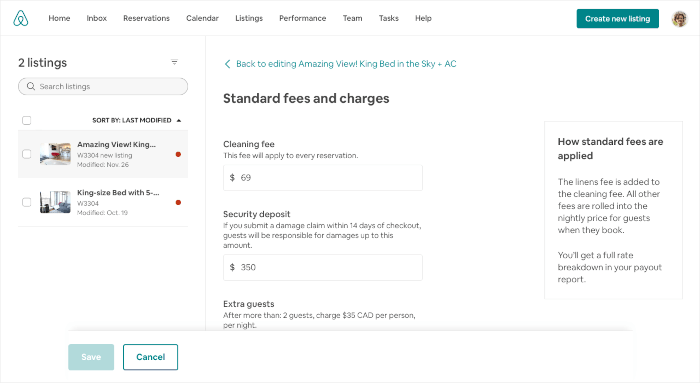
How Do You Change Your Cleaning Fee on Airbnb?
- Log in to your Airbnb host profile.
- Go to Your Listings and select the property you want to update.
- Open the Pricing section.
- Find Cleaning Fee and click Edit.
- Enter your new amount.
- Click Save.
Changes usually apply to future bookings only, not reservations already confirmed.
Frequently Asked Questions
Can I waive the cleaning fee on Airbnb? Yes, hosts can set the cleaning fee to $0 or waive it for specific guests, though most hosts who do this fold the cost into a higher nightly rate instead.
Who keeps the cleaning fee on Airbnb? The host keeps it. It's meant to reimburse whoever handles turnover cleaning, whether that's the host directly or a hired cleaning team.
What's a reasonable cleaning fee on Airbnb? A fee in the 25 to 50% of ADR range, adjusted for your bedroom count and actual cleaning costs, is a reasonable starting point for most listings.
What's the average cleaning fee on Vrbo? Vrbo cleaning fees follow a similar logic to Airbnb's, scaling with property size, though exact averages vary by market and platform since Vrbo hosts set fees independently the same way Airbnb hosts do.
How do guests avoid the Airbnb cleaning fee? Guests generally can't avoid a cleaning fee a host has set. Some hosts offer fee-free listings or fold cleaning into the nightly rate, which is the only way a guest sees no separate cleaning charge.
Is a $300 Airbnb cleaning fee too high? Not necessarily. For a large property, a $300 fee can sit comfortably inside a reasonable 25 to 50% of ADR range. The question isn't the raw number, it's whether that fee is proportionate to your nightly rate and property size, or whether it's pushing your total price well above comparable listings.
Do Airbnb Superhosts charge cleaning fees? Most do. Superhost status is about guest satisfaction and response rates, not fee structure, so Superhosts set cleaning fees the same way any other host does: based on actual turnover cost and what the local market supports.
Final Thoughts
A well-set Airbnb cleaning fee does its job quietly: it covers your real turnover costs without becoming the reason a guest picks someone else's listing over yours, and without dragging down your guest reviews if the cleaning it funds falls short. Benchmark against your actual cleaning cost, check what comparable properties in your market charge, and keep an eye on how your total price compares once the fee is added in.
Getting the number right is only half the job, and it's not really about the money on its own, it's about matching what you charge to what the clean actually costs you. The other half is making sure turnover cleaning actually happens on time, every time, without you personally chasing down a cleaning company between every checkout. iGMS's cleaning and team management tools automate that handoff, so your fee is covering a process that runs itself instead of one you're managing manually.