Airbnb Marketing Strategy: 11 Proven Techniques for 2026

Great guest reviews don't fill a calendar on their own anymore. This guide walks through 11 Airbnb marketing techniques, from listing optimization to influencer partnerships, that actually move bookings.
Key Takeaways
- A good Airbnb marketing strategy starts before you post a single ad: your listing title, photos, description, and pricing all do marketing work every time a guest searches.
- Social proof carries more weight than ever. Reviews, user-generated content, and influencer partnerships convert better than polished ads for most hosts.
- Video and short-form content (Reels, YouTube, TikTok-style clips) now drive more travel inspiration than static photos alone, especially with younger travelers.
- Local partnerships and your own direct booking channel reduce your reliance on Airbnb's algorithm and OTA fees over time.
- Marketing only works if the operational side keeps up. Vacation rental software like iGMS frees up the time hosts need to actually run these campaigns.

Providing an amazing guest experience is no longer enough to boost your occupancy rate. To attract guests and keep your calendar filled months ahead, you need a real marketing campaign behind your Airbnb listings.
Small businesses with a marketing plan are nearly seven times more likely to be successful, according to a recent survey on the state of small business marketing. Yet a quarter of small business owners surveyed admitted to not having a marketing plan at all.
So how do you build an Airbnb marketing strategy that actually works? Read on for 11 techniques you can use to beat the competition and take the lead in your market.
What Is an Airbnb Marketing Strategy?
An Airbnb marketing strategy is a plan for how you'll bring your short-term rental in front of the right travelers and turn them into bookers. It covers everything from your listing itself to the social media, email, and advertising channels you use to promote it, both on and off the Airbnb platform.
A good Airbnb marketing mix usually blends several of these: an optimized listing, social media, email marketing, word of mouth, a referral program, and other branding strategies aimed at growing your rental business as a recognizable brand. Every Airbnb host builds this mix differently, but the ingredients are largely the same.
Email remains one of the most reliable channels in that mix. Airbnb itself leans heavily on targeted email campaigns as part of its own marketing strategy, using them to build brand awareness, keep guests engaged, and drive repeat bookings. A simple email marketing list of past guests, built from your direct booking site, costs nothing to maintain and often outperforms paid channels for repeat stays.
That said, hosts tend to see the fastest traction on more visual platforms like Instagram, Facebook, and YouTube. These channels are built for the mix of promotional content and user-generated content (UGC) that acts as social proof for your rental.
Why Digital Marketing Matters for Your Vacation Rental Business
Offline marketing, word of mouth, local flyers, and community events, can still move the needle. But the majority of travel research and booking decisions now happen online, which makes digital marketing a core part of staying competitive as a host.
Skipping it is a real risk. Hosts who treat marketing as optional tend to get outranked and outbooked by competitors who treat it as part of running the business, not an afterthought.
The flip side is that not every digital marketing tactic deserves your time. Below are the strategies that have consistently worked for hosts and property managers, starting with the one most hosts skip.
What Airbnb's Own Marketing Can Teach Hosts
Airbnb's own marketing strategy is worth watching, because the company is built around a two-sided marketplace: engaged hosts attract good guests, good guests leave the reviews and content that attract more hosts and travelers, and the whole flywheel keeps feeding itself. SEO is part of that flywheel too. A large share of Airbnb's own traffic comes from search, which is exactly why capturing high-intent search traffic through your own listing and content matters at the host level as well.
Airbnb also leans hard on high-quality visuals and authentic, guest-generated content to convey what a stay actually feels like, and it actively encourages travelers to share their own experiences on social media to keep that content flowing. That guest-generated content doesn't just build goodwill, it has reportedly driven measurable increases in Airbnb's own social media engagement. Its biggest campaigns follow the same pattern. "We Accept," the company's 2017 Super Bowl ad, built an emotional narrative around belonging. "Get an Airbnb" and the Live Anywhere campaign, reported to have generated 223 million impressions, both leaned into the idea of a unique, lived-in experience rather than a generic place to stay. Airbnb's own trust and safety systems exist to back up that same emotional pitch with reassurance guests can act on.
None of this is a coincidence. Emotional narratives in advertising build the kind of loyalty that turns a single booking into a repeat guest, and authentic stories tend to produce better, more detailed reviews in return. The throughline across every one of Airbnb's campaigns is community, emotional storytelling, and authenticity, the same three ingredients that make an individual host's brand story work. When you write yours, highlight the actual experience a guest will have, not just the amenities, for the same reason.

11 Airbnb Marketing Strategies to Gain Traction
1. Optimize Your Airbnb Listing First
Every other strategy on this list sends traffic back to one page: your Airbnb listing. If that page doesn't convert, the rest of your marketing efforts are wasted clicks.
Start with your title and listing description. Both should lead with what makes your property different (a view, a hot tub, a walkable location) rather than a generic description that could describe any rental on the block. Check out iGMS's guide to writing an Airbnb listing title that actually earns clicks in search results.
Professional photography is non-negotiable. Listings with professional photos get up to 40% more bookings than listings without, and high quality photos consistently rank among the top factors guests cite when choosing between similar listings, more so than price in many markets. If you haven't had your space professionally shot, or re-shot in the last couple of years, that's the highest-ROI marketing dollar you can spend. iGMS's guide to Airbnb photos covers what to shoot, in what order, and common mistakes to avoid.
Listing completeness and your review score both factor into how Airbnb's own search algorithm ranks you, so an unfinished listing or a thin review history works against every marketing dollar you spend elsewhere. Reaching Superhost status is one of the clearest signals you can send, since it rewards the same habits, fast responses, few cancellations, strong reviews, that make a listing easier to market in the first place.
Finally, run through a quick pre-launch pass with iGMS's Airbnb host checklist to make sure nothing in your listing is working against you before you spend another dollar promoting it.
2. Get Your Pricing Strategy Right
Pricing is marketing. A nightly rate that's priced sharply against similar listings nearby shows up more often in search results and converts better once a guest lands on your page.
A static, set-it-and-forget-it rate leaves money on the table more often than not. Smart pricing tools (including Airbnb's own, and dedicated tools like PriceLabs that most successful hosts rely on) adjust your nightly rates automatically based on demand, local events, seasonality, and competitor rates. This keeps you competitive without you manually re-pricing every listing every week.
Weekly discounts of around 10-15% are also worth testing if you want to attract longer stays, which tend to mean fewer turnovers and less marketing spend per booked night. And if you're launching a new property, know that Airbnb typically boosts a new listing's visibility for its first 3 to 5 bookings, so it's worth front-loading your marketing push in those first few weeks rather than waiting to see how it performs.
A pricing strategy also protects you from the two most common booking problems: empty nights from being priced too high, and double bookings or tight turnovers from underpricing and overbooking yourself across platforms. A channel manager helps prevent double bookings by keeping your calendar in sync across every platform you list on.
3. Build a Reputation That Sells Itself
Reviews are one of the most persuasive pieces of marketing content you have, and you didn't even have to write them. Positive guest reviews build trust faster than almost anything else on your listing page, because they come from someone with no reason to oversell your property.
Actively encourage every Airbnb host's best source of new bookings, guest reviews, by sending a well-timed, personal message after checkout. Respond to every review, good or bad. A thoughtful, professional response to a negative review often reassures future guests more than a long string of five-star reviews with no host replies. iGMS's guide to handling bad Airbnb reviews walks through how to respond without making things worse.
Success stories and guest experiences are also marketing content in their own right. With permission, guest photos and quotes can become some of your best social media and website content, and Airbnb itself actively encourages guests to share their travel experiences on social media, which gives you an easy opening to ask.
4. Establish Your Brand
Differentiating your Airbnb business from the competition in a crowded marketplace starts with your brand. A strong brand, backed by a clear brand story, is the cornerstone of effective marketing because it builds trust and loyalty over the long run.
Your brand story is simply the reason your rental exists and who it's for: a restored farmhouse run by a local family, a design-forward loft for business travelers, a beachfront escape built for reunions. Incorporate a real personal element, who runs the property, why you got into hosting, a renovation story, directly in your listing description and host profile so guests see a person behind the space, not just a set of amenities. Lead with that story on your listing, your website, and your social channels, and it gives every other piece of content here something to connect back to.
A national survey on trust in the sharing economy found that pricing, transparency, and safety measures are the top criteria Americans use when choosing providers like Airbnb hosts. When you're building your brand, be transparent about house rules, pricing, and how you handle guest data, and put extra safety measures in place to reassure potential guests.
Having your own brand also makes your property memorable. Guests who had a great stay will remember your brand name, not just an Airbnb listing number, when they're ready to book again. Most guests are looking for an experience and a connection beyond just a place to sleep, the same insight Airbnb itself has sold at a brand level for years. Your version of that story doesn't need a national ad budget, just a clear sense of what a stay with you actually feels like.
To establish your brand, pick a name for your rental business and build a simple visual identity, including a logo. Use that name and logo consistently across your marketing materials, social media channels, and your Airbnb listing's title to tie everything together.
5. Boost Your Business With Facebook
About four out of 10 travelers turn to social media for travel inspiration, according to American Express Travel's Global Travel Trends Report. It doesn't stop at inspiration either: 62% of US travelers who use social media for trip planning say they've actually visited a place because of a social media post.
To put Facebook to work in your Airbnb marketing strategy, start with a Facebook business page for your properties. Link every post back to your listings on the vacation rental platforms you use.
Beyond posting about your rentals directly, use your page to share content useful to travelers: local tips, things to do, and nearby landmarks. This keeps your page active between bookings and builds an audience of future guests.
Facebook advertising is also worth testing. Paid ad campaigns can raise brand awareness, boost engagement, and bring in new followers, and Facebook will show you expected reach and cost before you commit any budget.
Airbnb ads work on the same principle, directly inside the platform. Boosting your listing through Airbnb's own ad placements can push an otherwise well-optimized Airbnb listing higher in search during slow periods, though it's worth testing on a single property first to see whether the extra bookings justify the cost for your market.
6. Get Instagram Savvy
Instagram has the highest conversion rate for travel visits and purchases of any social platform, which makes it especially useful for reaching younger travelers. More than half of Instagram's global user base is Gen Z or millennial.
Your business profile should look professional and consistent. Learn your way around a basic photo editing app (Snapseed and Lightroom are both solid free options) so your Instagram content looks polished without needing a professional photographer for every post. Don't over-edit, though. Overly touched-up photos set expectations your actual property won't meet at check-in. Social media marketing works best when it pairs visual storytelling with real guest experiences, not just styled shots, and it tends to perform best on visually appealing properties to begin with.
Different content formats serve different jobs on Instagram:
Posts
Posts work best when they focus on one clear idea, like a standout feature or amenity, rather than trying to show your whole property at once. Use the caption to point people toward your Stories or Reels for more.
A social media management tool like Social Champ or Socialbee can help you manage posting across platforms from a single dashboard if you're running more than one listing. Posting two to three times a week tends to be the sweet spot for engagement, enough to stay visible without flooding followers' feeds.
Stories
Stories disappear after 24 hours unless you save them to your Highlights, which makes them a low-pressure way to share quick updates: a virtual walkthrough, a renovation in progress, or a nearby event worth knowing about. Group related Stories into Highlights by topic so new visitors to your profile can find them later.
Reels
Reels work well for the same kind of content as Stories, but with more reach. If your rental has a standout view, a pool, or a hot tub, a short Reel built around it tends to outperform a static post for driving profile visits and saves.
Instagram isn't the only visual platform worth a look, though it's worth noting Instagram itself can drive direct bookings for unique properties on its own. Pinterest can do the same for design-forward properties, and it takes only minutes to set up alongside the content you're already creating for Instagram.
7. Create a Video to Promote Your Rental Property
A short promotional video does something photos can't: it lets a prospective guest experience moving through your space before they book. Create one for your Airbnb listing and your own website, and it keeps working for you long after you've filmed it.
Focus the video on your property itself, with secondary shots of nearby attractions and landmarks for context. A walkthrough of the interior and exterior, plus a drone shot if you have access to one, covers most of what guests want to see.
Use this video everywhere: your social channels, your direct booking website, and any paid ad campaigns you run.
8. Create a YouTube Channel for Your Brand
YouTube is the second-largest search engine after Google, which makes it worth a presence even if you only post occasionally.
A YouTube channel helps personalize your brand. Focus your YouTube marketing on videos and ads that feature your properties and help travelers get to know your area, with enough entertainment value that people actually want to watch. Cross-promote your channel on your other social platforms and your own website to build your subscriber base over time.
9. Influencer Marketing
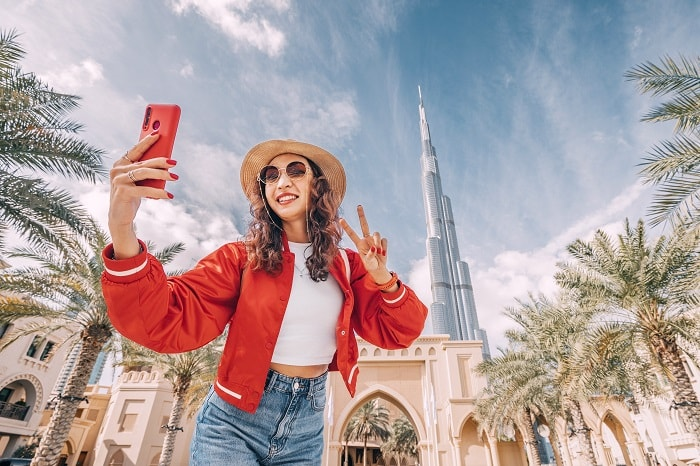
Partnering with the right influencers is especially effective for reaching Gen Z travelers. A quarter of Gen Z in the United States follow travel influencers, and their recommendations tend to carry real weight with that audience.
A partnership only pays off if you handle a few things first:
Identify the right influencer. Know your target audience, then check that the influencer's own audience actually overlaps with it and that their content style fits your brand.
Set clear goals. Decide in advance what you want the partnership to achieve, whether that's bookings, brand awareness, or user-generated content you can reuse, and how you'll measure it.
Create an affiliate or referral program around it. A referral program extends the reach of any single campaign and gives influencers (and past guests) an ongoing reason to keep sending you bookings.
Put the terms in writing. Cover compensation or stay credits, what happens if the partnership underperforms, and whether it's a one-off or ongoing arrangement.
Finding the right influencers takes time, but it adds a channel most of your competitors still aren't using well.
10. Embrace the Power of a Content Marketing Strategy
Even with every newer tactic on this list, content marketing still drives consistent bookings over time. A blog aimed at hosts and travelers, built around your own direct booking website, gives you a channel that doesn't depend on Airbnb's algorithm at all.
Good topics include localized guides that give travelers real insight into your neighborhood, money-saving tips, and honest comparisons between vacation rentals and hotels for the kind of trip your guests are planning. The goal is content people actually want to read, not just content built around keywords.
An SEO-optimized blog compounds over time. Every well-written, search-friendly post you create is another door into your direct booking site, and another source of traffic that doesn't come with Airbnb's service fees attached. Over a year or two, a blog built this way can drive traffic and more bookings on its own, with no ad spend behind it.
11. Local Partnerships Are the Best-Kept Secret
Partnerships with local restaurants, attractions, or equipment rental companies are an underused marketing channel for most hosts. In-person events like a local conference or market can work the same way.
Use these relationships to put together special offers and discounts for your guests. It's a mutually beneficial arrangement: local businesses get word-of-mouth exposure to your guests, and your guests get a reason to book with you over a listing that doesn't offer the same perks.
Frequently Asked Questions
What is the best Airbnb marketing strategy?
There isn't a single best strategy. The strongest approach combines a fully optimized listing (photos, pricing, description) with one or two channels, usually Instagram or Facebook, run consistently, plus a steady stream of guest reviews.
How do I advertise my Airbnb listing?
Beyond Airbnb's own search ranking, hosts advertise through social media (organic and paid), a direct booking website, influencer partnerships, local business partnerships, and content marketing like a blog.
Is paid advertising for Airbnb worth it?
Paid ads can work, particularly on Facebook and Instagram, but they perform best layered on top of an already-optimized listing and an established brand. Paid spend rarely fixes a listing with weak photos or an unoptimized description.
How often should hosts update their Airbnb marketing plan?
Review your marketing plan at least quarterly, and any time you notice a drop in bookings, a change in your local competition, or a shift in how a platform's algorithm ranks listings.
Get Creative With Your Airbnb Marketing Strategy
Effective marketing campaigns focus on real value and authentic content. What you share online should reflect your actual hosting practices and the genuine experiences of past guests, so new visitors get an accurate sense of what to expect.
A diverse, consistently updated marketing mix keeps guests interested: new local experiences to book, fresh photos, behind-the-scenes videos of what a stay actually looks like. There's no shortage of formats and topics to pull from once your listing itself is dialed in.
None of this works, though, if your actual Airbnb listing isn't optimized first. That's the one step on this list that makes every other strategy perform better.
Whichever strategies you choose, building relationships with guests and other local businesses plays a crucial role in your long-term results. A steady social media presence and consistent content creation grab attention, but they only convert once you back them up with detailed information about your property and the kind of experience the right guests can expect. Experienced hosts and new hosts alike find that community building, online and in their own neighborhood, makes every other marketing tool on this list work harder.
And marketing is only half the job. The other half is running your Airbnb business well enough to keep up with the bookings your marketing brings in. Vacation rental software like iGMS handles the operational side for every Airbnb host, guest messaging, channel syncing, task automation, so you can spend your time on the marketing that actually grows your business and helps you create the guest experience your brand promises.