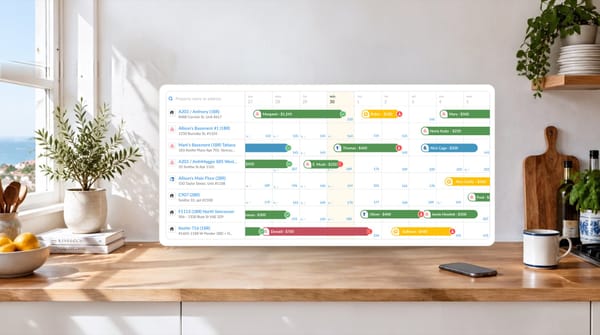
Questioning Your Vacation Rental Accounting Software Stack

A clear-eyed look at whether your current vacation rental accounting software stack is helping you scale profitably or quietly leaking cash and time. You will learn how to audit your tech, connect operations to financials, and design a stack that actually supports serious short-term rental growth.
Key Takeaways
- 1. Most accounting setups for STRs are stitched together tools, not true systems.
- 2. A profitable stack connects reservations, operations, and accounting in real time.
- 3. The right data structure and automation cut reconciliation time and errors.
- 4. Tech choices should support your portfolio strategy, not limit it.
- 5. Regular stack reviews prevent hidden costs and prepare you for rapid growth.
Stop Letting Your Accounting Stack Erode Profit
If you manage multiple short-term rentals, your accounting stack can quietly drain profit. Every manual export, messy report, or “I will fix that later” mapping issue costs time and money, especially during peak booking periods.
At this stage, “spreadsheet plus bookkeeper” is not enough. You need a real system that connects reservations, operations, and accounting in a way you can trust. When that happens, accounting becomes an operational weapon, not just a compliance chore. By the end, you should be able to spot weak points in your current vacation rental accounting software, compare what you have to best practice, and sketch a clear roadmap to improve.
Why Most STR Accounting Stacks Break at Scale
Short-term rentals look simple from the outside: guest books, stay happens, payout arrives. Under the hood, the cash flow is layered and messy.
Think about what flows through each stay:
1. Multi-channel payouts and different fee structures
2. Cleaning fees, pet fees, resort fees, and security deposits
3. Local taxes, occupancy tax, and sometimes tourism levies
4. Owner splits, co-host fees, and management commissions
On top of that, the timing is off everywhere. Airbnb or Booking.com might pay out at one point, the guest stay covers different dates, and owner payouts run on yet another schedule. If your accounting software does not model that timing correctly, your P&L and cash flow reports get warped. That is risky when you are trying to set pricing or plan for slower shoulder seasons.
Many operators end up with a “Frankenstack”: a PMS, a generic accounting app, CSV exports, email invoices, and manual owner statements pulled together at quarter-end. This leads to issues like:
1. Double data entry and mismatched property codes
2. Missing or wrongly labeled fees and discounts
3. Reconciliation only during tax time
4. Wrong owner payouts and confused vendors
“Good enough” tools turn into a real risk once you:
1. Pass 10 to 15 listings
2. Move into new markets or add more owners
3. Layer in dynamic pricing across channels
At that point, you need clean unit-level margins, including cleaning, channel fees, and merchant fees. If you cannot see those clearly, you end up mispricing, breaking local tax rules, upsetting owners, and stressing lenders who expect accurate reporting.
Defining a High-Performance Vacation Rental Accounting Stack
A strong stack has three main layers working together:
1. Reservation and operations, through a PMS or channel manager
2. Accounting ledger, like a cloud accounting tool or STR-focused system
3. Reporting and business intelligence, such as dashboards or custom sheets
Around that, you have payment processors, bank feeds, and expense tools that pull card spend and receipts into the picture. The rule of thumb is simple: your PMS holds detailed guest and stay data, your accounting system holds clean financial summaries.
Non-negotiable features for vacation rental accounting software include:
1. Property-level P&L tracking, using classes, locations, or profit centers
2. Automated bank feeds that match OTA payouts and card charges
3. A chart of accounts tuned for STRs, with lines for cleaning, OTA fees, merchant fees, supplies, utilities, and taxes
4. Strong integrations with your PMS and key sales channels
5. Support for multiple entities or owners, and multiple currencies if needed
You also need a clear “single source of truth”. The PMS is the source for bookings and occupancy counts, while the accounting system is the source for revenue and cost totals. To keep them in sync, set up:
1. Unique reservation IDs used in all systems
2. Standard property codes across PMS and accounting
3. Consistent fee and tax names so reports line up
Regular reconciliation workflows then tie reservations, OTA payouts, and accounting entries together on a tight cadence.
Connecting iGMS to Your Financial Reality
Here is how the data path should look across a modern stack. A guest books on an OTA or direct site, iGMS centralizes the reservation, pricing, and stay details, then your accounting software receives clear summarized data that matches your chart of accounts.
The way you name and structure rate plans and fee items inside iGMS matters a lot. Cleaning fees, pet fees, resort fees, and taxes should each map cleanly into their own accounting categories. When fee and tax logic is standard across your listings, reconciliation is faster and occupancy and ADR numbers are easier to line up with P&L results.
You can also cut a huge amount of manual work with automation, for example:
1. Automatic invoice creation and scheduled owner statements
2. Recurring journal entries for predictable expenses like internet or trash
3. Template-based payout rules for different owners or agreements
On the guest side, iGMS message automation for payment reminders, deposit info, and tax notes helps reduce billing disputes and write-offs. Rules in your PMS that tag bookings by channel, trip type, or length of stay can flow into accounting classes too, so you can see profitability by segment, not just by property.
To build trustworthy reporting, you first need shared definitions. What exactly counts as:
1. Occupied
2. Cancelled with penalty
3. Complimentary or house use
Those statuses in iGMS should always roll into your financial reports the same way. From there, you can design views that combine:
1. Operational metrics like occupancy, ADR, RevPAR, and length of stay
2. Financial metrics like gross margin, net profit per available night, and owner returns
That mix is what lets you tune dynamic pricing rules, judge channel performance, and avoid off-season cash flow surprises when booking volumes soften.
How to Audit Your Current Accounting Stack in 60 Days
A focused two month audit can change how your whole operation runs.
- Start by mapping your current data flows. List every tool in the chain (OTAs, iGMS, payment processors, bank accounts, accounting software, spreadsheets, and BI tools) and mark where data is entered by hand vs. synced automatically.
- Run a stress test using a busy month. Pick a sample of stays and follow them end to end, then check whether OTA payout reports match accounting revenue and whether you can produce a property-level P&L without losing a full day.
- Sort findings into three buckets: misconfigurations (wrong mapping or naming), process gaps (no monthly close or missing checklists), and tool limits (the software can’t support what you need).
- Sequence fixes in the right order. Clean up mappings and your chart of accounts first, then improve integrations, and only replace core systems outside peak season.
Making Smart Software Decisions for the Next Growth Phase
Before you touch your tech stack, get clear on your strategy. Are you focused on adding more units in one city, growing across several markets, or shifting from rental arbitrage to owner management?
Different paths need different accounting depth:
1. Multi-market or multi-entity setups need clean separation by LLC or owner
2. Owner management models need detailed, transparent statements
3. Complex tax environments need strong tracking and reporting
Pick vacation rental accounting software and PMS integrations that can support your “next doubling” in properties without a full rebuild. When you look at vendors, go beyond feature lists. Ask about:
1. Integration depth with your PMS
2. Quality of documentation and support
3. Uptime and track record with STR operators
You also want help with implementation, including templates for STR charts of accounts and access to people who understand this space.
Inside your own team, build a simple finance rhythm:
1. Daily payout checks for OTA and processor deposits
2. Weekly reconciliations and exception handling
3. Monthly closes with property-level P&Ls
4. Quarterly reviews that mix operational and financial data
Make it clear who owns bookkeeping, who owns integrations, and who signs off on monthly numbers. With that structure, you can adjust minimum stays, discounts, and channel mix based on facts, not gut feelings.
Final Thoughts
A profitable accounting stack for short-term rentals is a tightly connected system, not a loose collection of tools. By aligning iGMS with a purpose-built accounting setup, standardizing data structures, and establishing disciplined reconciliation workflows, you gain reliable unit-level visibility and control over margins. Regular audits and strategy-led software choices ensure your tech supports your next phase of growth instead of quietly eroding profit.
Take Control Of Your Vacation Rental Finances Today
If you are ready to simplify your bookkeeping and see exactly how your properties are performing, our vacation rental accounting software is built to help. At iGMS, we bring all your key numbers into one clear, easy-to-use dashboard so you can make confident decisions faster. Get started now to track income, expenses, and profitability with less manual work and more accuracy. Let us handle the numbers so you can focus on growing your vacation rental business.