How Per Accommodation Per Stay Pricing Works

Learn how to maximize profitability with per accommodation per stay pricing and make sure your Airbnb or other vacation rental property is succeeding year-round.
Key Takeaways
- Airbnb and Vrbo hosts can set prices per accommodation per stay, but these OTAs also allow them to charge additional guest fees.
- Add-ons boost profitability. A resort fee is one example of extra charge added to hotel stays and vacation rentals for amenities such as pools.
- Dynamic pricing can be applied to a per accommodation pricing model to maximize profitability.
You’ve probably heard of the “per accommodation per stay” pricing model. It's a simple, transparent way to price a vacation rental or hotel stay.
But how exactly does this method work—and will it make you a profit? In this post, we’ll answer your questions and some other commonly used terms. Plus, we’ll show you some tried-and-true ways to maximize profitability.
What Does Per Accommodation Per Stay Mean?
Per accommodation pricing means that prices are charged for the whole property, and not based on a specific number of guests staying in the same room or per night. Pricing per stay, on the other hand, means that a fee is charged once per booking.
Per accommodation pricing simply defines what the fee is charged for (the unit as a whole), while the period depends on the property. Monthly stays often have flat rates.
For example, the price of a hotel stay typically covers two people sharing. If a single person wants the room, the fee is the same, and they’ll cover the cost themselves. For a vacation cabin that sleeps six people, the fee is fixed, even if only three people use it.
Per accommodation prices vary based on factors such as location, time of year, and level of demand. As well as the basic rental fee for the accommodation, this may include additional amenities or services.
How Is Per Accommodation Per Stay Used On Vacation Rental Sites?
OTAs | Per Night | Per Stay | Per Accommodation |
Airbnb, Booking.com | Nightly rate is the default option. It's possible to add fees for additional guests | One-time fees, such as cleaning fees, pet fees, and platform fees, are charged once per reservation | If you disable fees for additional guests, you'll have a price per accommodation; weekly and monthly stays can also be displayed as a flat fee (after discounts) |
Online travel agencies like Airbnb, Vrbo, and Booking.com usually break down the total reservation cost into a nightly rate and additional fees. Although hosts can set prices per accommodation, these OTAs also allow them to charge additional guest fees.
For example, you can set a standard per-accommodation price for two guests per night and then charge an additional fee for each extra guest if your unit can accommodate more people.
Other fees, such as cleaning fees, pet fees, and platform fees, are commonly charged as flat fees per stay.
Guests can be asked to pay a security deposit at the start of their stay to cover any damage. A deposit per accommodation means that one deposit is charged per property, not per person.
When should I charge per accommodation per stay for vacation rentals?
Nightly rates with fees for additional guests are the standard option on Airbnb and other platforms. Still, in some cases, it makes sense to charge only per accommodation and per entire stay, not per person. (That doesn't mean you shouldn't set a maximum occupancy limit.)
Luxury properties
Charge per accommodation when the property is sold as a premium whole-unit experience, where privacy, exclusivity, and amenities matter more than headcount.
Unique properties
A treehouse, villa, yurt, cabin, or other uniquely shaped property emphasizes the experience, not the number of people.
Event-based vacation rentals
Charge per accommodation when demand is driven by an event or specific dates. These are usually group bookings.
What is Resort Fee Per Accommodation Per Stay?
A resort fee is an additional cost typically charged for hotel stays or vacation resorts. In most cases, it’s considered an additional amount covering any items, privileges, or amenities not included in the basic room rate.
The fee is levied at the owner’s discretion and may include anything from access to the pool, gym facilities, and activities for children to local telephone calls and internet access. This is sometimes described as a destination fee or amenity fee.
If a resort fee is charged per accommodation per stay, that means it’s levied for each hotel room for each night you stay there. So, if a hotel charges a $40 resort fee per accommodation per night and a guest books one room for three nights, their total cost would be $120 on top of the basic price and taxes. Resort fees typically cost up to $45 per night.
While some hotels provide resort fee information, explain what it covers, and answer queries about the fee, others aren’t so transparent. This is because US law does not require a resort or hotel to mention resort fees at the start of the booking process. You can avoid paying resort fees if you stay at fee-free hotels.
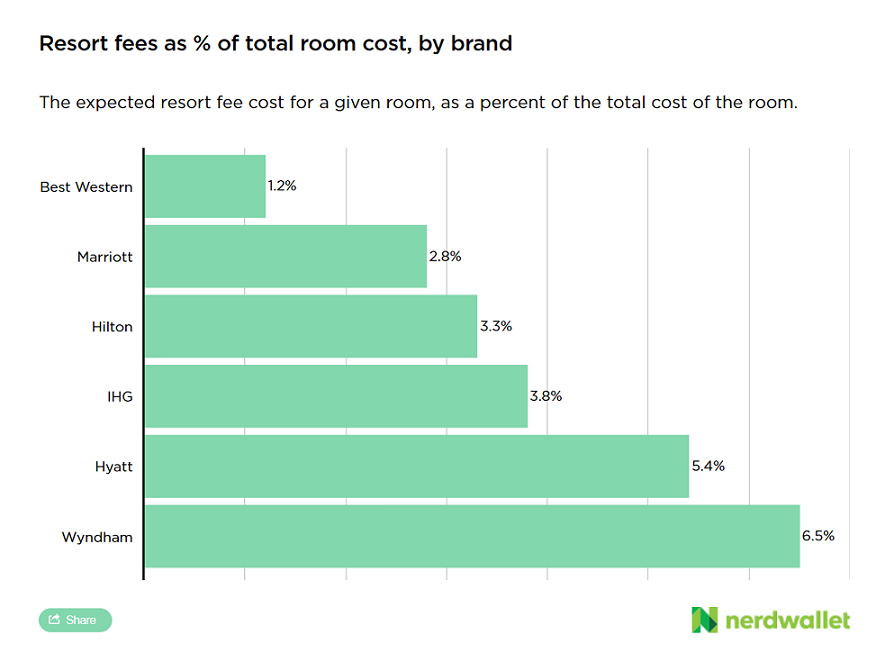
Image Sourced from Nerdwallet.com
How to Maximize Profitability with Pricing Strategy
To maximize profitability, business owners need to find a balance between charging enough to make money and setting fees that customers find acceptable.
Determine your optimal base price
Your base price is the price of the accommodation without any add-ons.
To find the optimal number, consider what you’ll need to charge to cover your costs and make the desired profit.
For example, if you’re pricing a vacation rental, you need to factor in:
- Property maintenance.
- Cleaning and laundry services.
- Energy bills (higher in winter).
- Pool/garden maintenance.
- Mortgage payments.
- Insurance coverage.
- Advertising and marketing expenses.
- Various taxes depending on the location of your rental.
- Property management or agent fees.
- A contingency budget for damage or repairs over time.
Figure out your break-even point after all these costs have been accounted for, and use this as your base price. It’s a good idea to keep track of expenses and admin by using real estate accounting software specifically designed for rental businesses and real estate companies.
Ideal for landlords and estate agents, cloud-based tools like this make it easier to track expenses from different properties and file property taxes in one location. Crucially, for vacation rentals, there are also options that allow for multi-currency bank accounts and invoicing, making it easier to manage your property’s finances wherever you are.
Adjust prices based on seasonal and cyclical changes
Your property might be more popular at certain times of the year, depending on the location and amenities—and you can adjust the fees accordingly. For instance, rentals in mountain resorts would be more expensive during ski season, but you can offer lower fees to make sure you boost occupancy in summer.
Weekends, public holidays, and school vacation periods are generally more popular, so customers will expect to pay more for rentals on those dates. If a festival or a special event is happening nearby, you can also increase your fees for the duration, so remember to check local calendars.
This demand-based strategy involves forecasting, so you’ll need to look at current trends and the historical performance of your property. If you took a significant number of bookings last fall, you could reasonably expect the same again this year unless the market has changed.
Offer discounts and promotions to boost booking rates
Figuring out how to offer discounts without sacrificing profits is crucial. Plus, you don’t want potential customers thinking, “What’s the catch?”, nor do you want to attract the types of guests who’ll trash the place.
Many properties and hotels offer an early-bird discount for people who book by a specific date, which helps you to lock in bookings for the upcoming season. But if you’re trying to shift the remaining accommodation, you can reduce fees for last-minute bookers.
You could also apply discounts for booking multiple rooms or properties and provide a loyalty or referral scheme for regular bookers. They might collect points or get money off a return visit. You can also give people the option to pay a lower fee for booking at a non-refundable rate. This means you still get the money even if they cancel, as well as potentially re-selling the accommodation.
Another strategy is to partner with other local businesses and services to offer promotions. If there’s a bar or restaurant, fitness center, or transport rental company close to the vacation property, arrange discount coupons for your guests. You’ll get a commission for every guest you send their way, and travelers will appreciate the inspiration for places to visit.
Assess market demand and target competitive prices
As well as basing prices on the attributes of your property, such as location or available amenities, you also need to think about the wider market and strategies of your competitors.
You have to make sure that your fees are not too far above or below the market average and that your offering represents the best value to travelers. That’s why it’s best not to get into a price war or a “race for the bottom” with your competitors. Instead, the answer is in providing a unique service or experience that they don’t offer.
For example, most hotels base their prices on two people sharing, which means that solo travelers usually get hit with an extra fee for occupying a two-person space. Given the growing popularity of solo travel, you could decide to target this market and offer accommodation at a fair price for single travelers (you could make up any shortfall with add-ons).
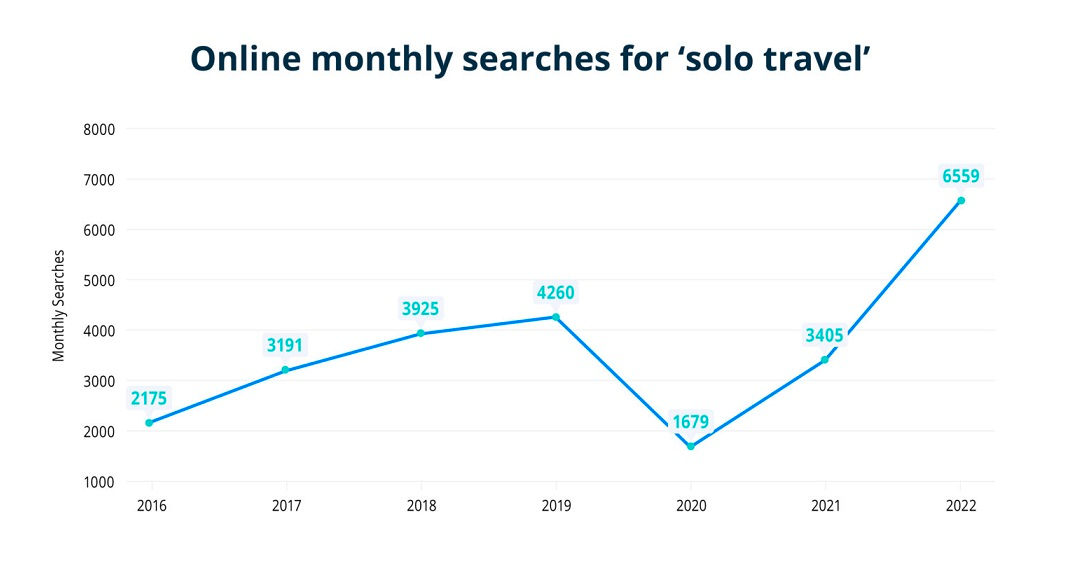
Image Sourced from travel.radicalstorage.com
Create customizable packages and offer add-ons
Instead of charging a sneaky destination fee, allow guests to select the extras they want, such as internet access, a daily newspaper, or an in-room safe. You might offer the option of upgrading to a superior room or property or suggest airport transfers, shuttle buses to the town or beach, and tours of the area—all for an optional additional charge.
With that in mind, it’s always best to be transparent about additional expenses. Pricing them separately from the basic cost is also a psychological marketing strategy called partitioned pricing or drip pricing. People perceive the base rate and the extras as two different things, not as one large total cost.
Reduce operational costs
One way to maximize profitability is to reduce the cost of running your properties. Charging security deposits covers you for any damage and avoiding bargain-basement prices can help you attract trustworthy guests. If you encourage people for long-term stays, you’ll reduce the costs associated with changeovers.
You can also save money if you negotiate the best deals for things like cleaning services and property agent fees.
Here, the right tools will help you increase efficiency in admin tasks, such as financial reporting and customer inquiries. With data gathered from enterprise resource planning software, you can spot ways to streamline operations and save money by having all the data in one place.
In addition, you could set up automation for suggesting add-ons, processing payments, and handling check-ins and check-outs—plus a chatbot to answer FAQs. Meanwhile, dynamic pricing tools monitor market conditions and competitors in real time and allow you to optimize your rates accordingly.
Minimize over and underbooking
You might not think that either over- or underbooking would be a desirable option, but overbooking is a known tactic.
Hotels allow guests to book more rooms than are actually available so that when some inevitably cancel, they’ll still enjoy high occupancy. That said, if the predicted cancellations don’t happen, you’ll have to turn people away (even if they’ve paid a deposit).
Underbooking can occur when business owners advertise different accommodations on each distribution channel, usually to appeal to various audience segments. The risk here is that one channel could sell all its rooms and start turning people away, while other properties remain unsold on another platform.
When you’re charging per accommodation per stay, rather than per person, you’ll still get paid the total fee even if the property or room is under-occupied.
How to Adjust Pricing Across All Channels?
Dynamic pricing is one of the most effective ways to maximize your property's revenue potential. Instead of relying on fixed nightly rates, it automatically adjusts prices based on market demand, booking trends, seasonality, and other demand signals.
With the iGMS Revenue Management Tool, you can automate these price adjustments across your calendar. The tool updates nightly rates every 24 hours, lets you preview recommendations before applying them. You can set minimum and maximum price limits, weekend and seasonal adjustments, and minimum-stay rules.
You can choose between Conservative, Recommended, and Aggressive pricing strategies to match your revenue goals, while iGMS continuously adapts your nightly rates to changing market conditions and updates prices across all major booking channels, Airbnb, Vrbo and Booking.com (and your direct boooking website).
FAQ
What's the difference between per accommodation and per stay?
Per accommodation refers to charging for the entire rental unit rather than each guest. Per stay refers to how often the charge is applied: usually once per reservation or stay. These terms are often combined, as charging per accommodation per stay.
What's the difference between per accommodation and per person?
Per accommodation means the price applies to the entire rental unit or hotel room, regardless of how many guests stay there, up to the maximum occupancy. Per person means the total price depends on the number of guests, with each additional person increasing the cost.
What's the difference between per accommodation and pricing per night?
Per accommodation means the price applies to the whole rental unit. Per night defines that charge applies for each night. These terms are not mutually exclusive. A vacation rental can be priced per accommodation per night, meaning guests pay one nightly rate for the entire property. The other optionis to charge per accomondation per entire stay.
Can dynamic pricing be applied to per reservation per stay pricing model?
Yes. Dynamic pricing can be applied to a per accommodation and per stay pricing model, usually by adjusting the nightly rate that determines the total booking price. For example, the nightly rate can increase during periods of high demand or decrease during slower periods. One-time per-stay fees, such as cleaning fees, remain unchanged. This is how STR hosts optimize revenue.
Which vacation rental types should be charged per accomodation per stay?
Luxury homes, villas, cabins, treehouses, yurts, domes, tiny houses and other unique vacation rentals where guests are paying for the overall experience are a perfect match for per accomodation per stay pricing. Event-based rentals that attract groups for occasions such as bachelor or bachelorette parties, also benefit from per accommodation and per stay pricing.
Final thoughts
Per accommodation per stay pricing strategies are simple to calculate, offer a transparent structure for customers, and can easily be adjusted for market conditions.
It’s important that you keep a close eye on local market trends, customer preferences, and competitor strategies. Use iGMS as your property management system to improve your revenue management. Your prices will be optimized to match demand and applied consistently across channels.
About the Author
Ryan Grundy is an experienced writer of business content, with a background that spans both brand and marketing agencies. He has helped tech businesses find the right words across a range of formats, from web and social to campaigns and concepts.