Airbnb House Rules: Examples and a Free Template for Hosts
Strong Airbnb house rules help prevent guest issues before they happen. Use our free, customizable template and practical examples to create clear rules that protect your property and improve every stay.
Key Takeaways
- As guests see your specific house rules on the listing page prior to reserving, it helps filter out guests who won't be a good fit and reduces post-booking conflicts.
- Rules that are specific, clear and free from general statements are easier to enforce.
- Rules can and should be updated after recurring issues or before peak season.
- To ensure consistency and compliance, use an Airbnb house rules template that you customize and send automatically to guests before check-in with the help of vacation rental software.
Whether you’re renting your home for just a few weekends of the year or it’s a year-round Airbnb business, all vacation rentals need to have Airbnb house rules. The house rules for your property are just as important as your Airbnb listing as they ensure your property remains ready to host many future guests safely.
If you’ve never written Airbnb rules, this Airbnb house rules template serves as a user-friendly starting point. From essential smoking rules to additional rules about finer details like laundry, it’s possible to create a relaxing vacation for guests according to your own house rules.
What Are Airbnb House Rules?
Airbnb house rules give Airbnb hosts the opportunity to professionally and clearly state what the guests can or cannot do, what is expected of them, and what the possible penalties are if the rules are broken. It offers specific guidelines for their listing, covering topics like check-in and checkout times, smoking, quiet hours, maximum guest counts, and pet policies.
Guests agree to these rules when booking and hosts can publish them directly on the property page under a dedicated section. Breaking these rules can lead to a negative review, early termination of the stay, or, in serious instances, legal trouble and removal from the platform.
How to Get Started Writing Your House Rules
Before you sit down to write your Airbnb house rules, think of the type of potential guests that your home might attract and their possible demands. For example, will your guests tend to be grandparents, families with young children, or business travelers? Be sure to write the house rules based on the type of future guests that may rent your property.
Then, start with the ground rules. These are the non-negotiable rules for guests that hosts are unwilling to compromise on. This typically includes smoking, pets, and checkout times.
What Should You Include in Your Airbnb House Rules?
Your house rules list helps set expectations for your guests of what is considered reasonable behavior. The following are standard house rules and sections that many Airbnb hosts include and you can tailor to fit your guest profile and property type.
Opening statement
Set the tone in a few words explaining why you have the house rules and why guests should follow them. Mention that failure to adhere to the rules may result in deductions from the security deposit (or other penalties).
Parking
Let the potential guests know about the parking rules before sending the copy of the Airbnb house rules or include it in your automatic messaging enabled by iGMS.
Questions to consider about parking are:
- Are your guests able to bring their own vehicles?
- What is the maximum number of cars allowed?
- Where can they park?
Off-limit areas
If there are any areas in your house that are off-limits to your guests, it is a good idea to outline them in your house rules. You’re completely within your right to create off-limits areas as long as it’s communicated upfront. It’s especially useful if you live on-site or store valuables, personal documents, or private belongings in certain rooms or closets.
Smoking
No matter if you are a smoker yourself or not, you should seriously think about banning smoking at your rental. Not all guests will put cigarette butts in a trash bin which means that you can end up finding them lying around your property.
Besides, not all guests will be able to put up with the cigarette odor of your rental. It will be extremely difficult to remove it, once you decide to turn your rental into a non-smoking place.
Parties and events
If you don’t want your house to turn into a complete mess after a raging party, make sure to add the “no parties” rule to your house rules list. The “no parties” rule will protect your house from damages and your wallet from having to pay for an “early renovation”. In addition, your rental will be a safer place without parties, as sometimes things might get out of control after a dozen cocktails.
To prevent parties at your rental, be very specific about the number of guests/visitors. Avoid words such as “a few” and “a couple”, otherwise some guests can invite 15 visitors, arguing that it is just “a small gathering”.
Visitors
Think about if you’ll allow any extra visitors or if only registered guests will be allowed. If you are fine with your guests bringing anyone along, it is still a good idea to:
- Limit the number of visitors
- Set fees for extra overnight visitors
- Insist on prior approval
This will help you to protect your rental from additional wear and tear and extra usage of the provided supplies.
Noise and the neighborhood
Highlight the rules against excessive noise late at night and/or disrupting the neighbors. Set quiet hours when your guests need to keep noise to a minimum as well as penalties they may face if they break your rules.
Laundry
Let your guests know whether you allow them to use your washer and dryer. If so, is there a limit on how much laundry they may do?
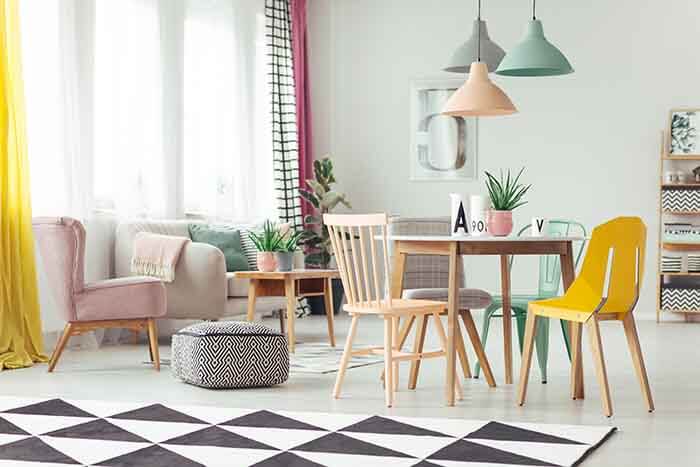
Eating areas
Decide on whether your guests may eat in all the rooms of your property. If you do have designated eating areas, let them know in your house rules.
In fact, by restricting areas where your guests can enjoy their food you can save hours at the laundry. If guests are allowed to eat everywhere they want, stains on your sofa or even bed covers are unavoidable.
Barbeque
If your property has a barbeque that guests can use, be sure to leave instructions on how to:
- Set it up
- Use it
- Properly clean it
Garbage and recycling
Include details on how to dispose of the garbage and where exactly your guests need to throw it out. This will help ensure that you’re not left with a huge pile of trash on checkout day.
Hot tub/swimming pool
If your property has a hot tub/swimming pool, ensure to lay out the:
- Safety rules
- Restrictions regarding the time of day that they can access the pool
- Any prohibited items in the pool area

Balcony/deck area
Balconies and decks are a great space to congregate and take in the views of the city. However, it’s a place prone to accidents and may pose hazards for younger children in particular. To prevent nasty falls and reduce your liability, ensure to include safety rules regarding the use of these spaces in a dedicated section.
Pets
It is up to you to decide whether or not you allow pets at your vacation rental. That said, as more people are traveling now with their furry friends, it makes sense to consider making your rental pet-friendly.
By applying a few tweaks to your property, you can set it up for pets and charge a higher rate. If you’ll be allowing pets, you’ll still need to create rules and/or restrictions regarding pets and pet sizes. It can also be a good idea to charge an extra cleaning fee, which you’ll highlight in your house rules.
However the case for creating a house rule that prohibits pets is equally strong. Opening your property to travelers with pets has some cons to ponder like:
- Travelers with pet allergies won’t book your place.
- Your property will be prone to extra damage and wear and tear.
- You might find your place messy and untidy if a pet owner fails to look after their pet’s needs.
- Your property will likely require extra cleaning.

Security
Remind guests that their belongings will be kept safe and secure if they remember to close and lock all the doors and windows before leaving the property. This would also be a good opportunity to remind guests to turn off the lights and air conditioner before leaving the premises.
Damages and breakages
Let guests know what they should do if they break or damage something at your property. For cases when the cost of the damage exceeds the security deposit, make sure to mention that the costs will be billed to guests and reported to Airbnb.
Checkout arrangements
Mention what guests should do before they checkout. Specifically include rules on cleaning, garbage disposal, and key handover.
Emergency contact details
Provide emergency contact numbers in case anything goes wrong during your guests’ stay at your property.
Compliance
Clearly state what consequences your guests might face in case they fail to adhere to your rules (e.g., penalties, eviction, etc.).
Standard Airbnb House Rules Examples

Standard Airbnb House Rules Examples
Here is a brief list of house rules that Airbnb hosts might want to include in their welcome book or Airbnb listing:
- Guests and visitors should comply with the parking regulations and requirements and must show consideration to other vehicles in the neighborhood.
- No shoes inside the home.
- No smoking inside the Airbnb. Cigarette butts must be disposed of in the ashtray provided in the backyard of the property.
- No parties or events.
- No unregistered guests or visitors allowed. The maximum property capacity is four people.
- Quiet time after 11 p.m.
- No eating or drinking in the bedrooms. Please enjoy your meal in the dining room.
- Dispose of the garbage in the trash bin.
- Please use the swimming pool only between 10 a.m. and 3 p.m.
- Keep a close eye on your kids while being on the balcony.
- No pets allowed.
- Make sure to turn off the lights, air conditioning, and any electronics when you leave the house. Don’t forget to close the windows and lock the door.
- Report any damages and/or breakages in a timely manner. Damages exceeding the security deposit amount must be paid by guests and will be reported to Airbnb.
- Wash the dishes, and throw out the garbage before checkout.
Airbnb House Rule Template to Copy and Customize
The following Airbnb house rules template covers key eventualities for a typical vacation rental. Use your property type, location, target guests, and hosting style to tailor it for your rental property.
Check-in/Checkout
- Check-in time: [3:00 p.m.] – [10:00 p.m.]
- Checkout time: by [11:00 a.m.]
- Self check-in via [keypad/lockbox/in person] — instructions provided after booking
- Late checkout requests must be approved in advance; unapproved late checkout may incur a fee of [$__]
- Early check-in subject to availability — message host to request
Noise
- Quiet hours: [10:00 p.m.] – [8:00 a.m.]
- No loud music, amplified sound, or excessive noise at any time
- Please be respectful of neighbors
Guests
- Maximum occupancy: [__] guests
- No parties or events
- Unregistered visitors are not permitted to overnight
- Daytime visitors must be approved by host in advance and are limited to [__] additional people
Pets
- Maximum of [__] dog(s), prior approval required, along with an additional pet fee of [$__]
- Pets must not be left unattended in the unit
- Guests are responsible for cleaning up after pets, indoors and outdoors
Smoking
- No smoking or vaping anywhere on the property, including balconies/patios
- Violation may result in a cleaning fee of [$__] and/or early termination of stay
Parking
- [__] parking spot(s) included, located at [description/location]
- Do not block driveways, neighboring spots, or fire lanes
Kitchen
- Guests may use the kitchen and provided appliances/cookware
- Please clean dishes, surfaces, and appliances after use
- Take out the trash before you check out — bins located at [location]
Safety
- Smoke and carbon monoxide detectors are installed and tested
- Fire extinguisher located at [location]
- Emergency contact: [host name/number]
- In case of emergency, call [local emergency number]
Off-Limit Areas
- [Room/area, e.g., "Owner's closet", "Garage", "Basement"] is off-limits to guests
General
- Treat the property with the same care and respect you'd want in your own home
- Report any damage or issues to the host immediately
- Failure to follow these house rules may result in additional fees, early termination of the reservation, or a negative review
What Happens When Guests Break Your House Rules?
If a guest breaks the rules of your Airbnb listing, you can deal with them through Airbnb if you deem the violation serious enough. That said, it’s recommended that when a guest violates those critical ground rules to involve Airbnb and try to resolve the issue, especially if it involves property damage. Should you choose to follow this route, you can report the guests by reaching out to Airbnb Support.
If you can’t reach an agreement, you can also escalate the matter via the Resolution Center and Airbnb will step in as a mediator. Then, in the unfortunate event that it resulted in property damage, you also file a reimbursement request via the Resolution Center to use AirCover for Hosts.
However, Airbnb can only support you, if you’ve communicated these rules to your guests prior to booking. You can, for example, use a vacation rental software solution like iGMS that includes an AI Agent that can automatically send house rules to guests at booking confirmation and 24 hours before check-in again.
Final Thoughts
Having the right Airbnb house rules that match your home and preferences will help avoid accidents and reduce guest damage to your property. Remember to keep your house rules simple, yet explicit. When your guests understand your rules, it will give you more peace of mind and let you feel more in control.
FAQs
How do you keep your house rules fair?
To keep your Airbnb house rules fair, just think about your pain points and the things that have happened at your property in the past. Then, draft a set of house rules for your vacation rental that proactively addresses those concerns. And remember, don’t write house rules that are overly strict because your house rules document will very quickly be ignored by your guests.
How long should your Airbnb house rules be?
Shorter house rules for a rental property is generally better. Aim for a list guests will actually read, typically no more than 12 clear rules. Guests tend to skim long lists. So, prioritize the rules that protect your property and neighbor relationships most, and save minor preferences for a welcome guide instead.
What are some tips for writing house rules?
Effective Airbnb house rules are simple and easy to follow. Don’t leave anything in the rules open for interpretation by being as explicit as possible. Then, make your guests aware of these rules before they check into your Airbnb listing. Not only should your guests review your house rules before a stay, but it’s also key that you look through them from time to time. It might happen that over time you want to modify your list based on your hosting experience.
Can hosts create custom rules for their rental property?
Yes, hosts can adjust rules as needed, like adding stricter noise policies during high season or for properties in shared buildings, or updating pet policies if circumstances change. Airbnb allows hosts to edit house rules anytime through the listing settings, though changes only apply to new bookings, not existing reservations.
What happens if an Airbnb guest breaks certain house rules?
Depending on severity, consequences for breaking house rules on Airbnb range from canceling the reservation or filing a claim through AirCover for damages to suspension from the platform. Rules need to be clearly stated in the listing before booking for Airbnb to back a host in a dispute, which is why having them documented (not just verbally communicated) matters.