How to Take Great Airbnb Photos: The Complete Host Guide

Airbnb photos showcase your rental and its offerings at their finest. The images you use can make or break a guest’s booking decision, so knowing how to take exemplary pictures is essential. This guide will help you learn to take perfect Airbnb photos to maximize your bookings.
Key Takeaways
- Airbnb photos are the first thing a guest judges before they read a single word of your listing, so they carry more weight on booking decisions than almost any other part of your page.
- Aim for 20-30 well-composed photos per listing rather than maxing out Airbnb's 100-photo allowance. Quality beats quantity every time.
- Airbnb's baseline photo specs are a 3:2 aspect ratio and a minimum resolution of 1024 x 683px, though shooting closer to 1200 x 800px gives you more room for cropping across devices.
- You don't need a professional camera to get great results. A smartphone, natural light, and a few staging basics will get most rentals most of the way there.
- If you want it done for you, Airbnb's Pro Photography Program pairs you with a local photographer and deducts the cost from a future payout, so there's nothing to pay upfront.
Airbnb photos are doing the selling before a guest ever reads your description. Someone scrolling through dozens of listings will decide whether to click into yours based on your cover photo alone, and they'll decide whether to book based on the dozen or so photos after that. High quality photos also help your listing surface higher in Airbnb's own search results, not just in a guest's browser. Get them right and you'll see it in your click-through rate and your occupancy rate, often at the expense of other listings nearby that skipped this step. Get them wrong and even a beautifully renovated property will get scrolled past.
The good news: you don't need a professional photographer or a full camera bag to take great Airbnb photos. You need decent light, a tidy space, a bit of technique, and a plan for how you'll shoot and organize the shots once you have them. Photos are also just one piece of a broader Airbnb marketing strategy, but they're the piece everything else depends on.
How Many Airbnb Photos Should You Upload?
Airbnb lets hosts upload up to 100 photos per listing, but that ceiling isn't a target. More photos don't automatically mean more bookings, and a gallery padded with filler shots can do the opposite: it buries your best images and signals that you didn't put much care into the listing.
Prioritize quality over quantity. Ten bright, sharp, well-composed photos beat fifty dim or repetitive ones every time. On the other hand, too few photos leaves guests guessing about what they're actually booking, and a thin gallery can read as a red flag rather than a minimalist choice.
Most well-optimized listings land between 20 and 30 photos. Shoot several angles of every room, then edit down to the images that actually show the space at its best. As a rule of thumb, plan for two to four photos per room, plus a handful of exterior and neighborhood shots.
What Are Airbnb's Photo Requirements?
Airbnb doesn't enforce hard requirements the way some booking platforms do, but it does publish style and size guidance hosts should follow:
- Aspect ratio: a 3:2 width-to-height ratio, which matches how most cameras and phones shoot by default.
- Minimum resolution: 1024 x 683px. If you can shoot or export closer to 1200 x 800px, do it. The extra resolution gives Airbnb's system more to work with when your photo gets cropped into square search thumbnails versus the wider listing view.
- File size: keep individual files under roughly 10MB.
- Format: JPG or PNG, exported as JPG for the smallest file size without a visible quality loss.
None of this requires special software. Most phone cameras and basic editing apps default to settings that meet or beat these specs.
What Equipment Do You Need for Airbnb Photography?
You have two realistic options: a digital camera or a smartphone, and either can produce listing-ready Airbnb photos.
If you're shooting on a camera, use one with adjustable settings so you can control exposure and white balance room by room, and pair it with a tripod. A tripod alone will do more for your photo quality than a lens upgrade. It removes camera shake, keeps your horizon lines straight, and lets you use a slightly longer exposure in darker rooms without blur.
If you're shooting on a phone, a small tripod or stand does the same job. Most modern phone cameras handle Airbnb photography just fine. What matters more than the hardware is light, angle, and a clean, decluttered room, which is what the next section covers.
Do you need an expensive camera?
No. An expensive camera can help in low light or with a skilled hand behind it, but it won't fix bad staging or bad lighting, and it won't outperform a well-shot phone photo in good light. Spend your effort on the room, not the gear.
How to Take Great Airbnb Photos: 9 Photo Tips That Work
1. Clean and declutter first
Nothing turns a guest off faster than a photo of a cluttered or dirty space. Before you shoot:
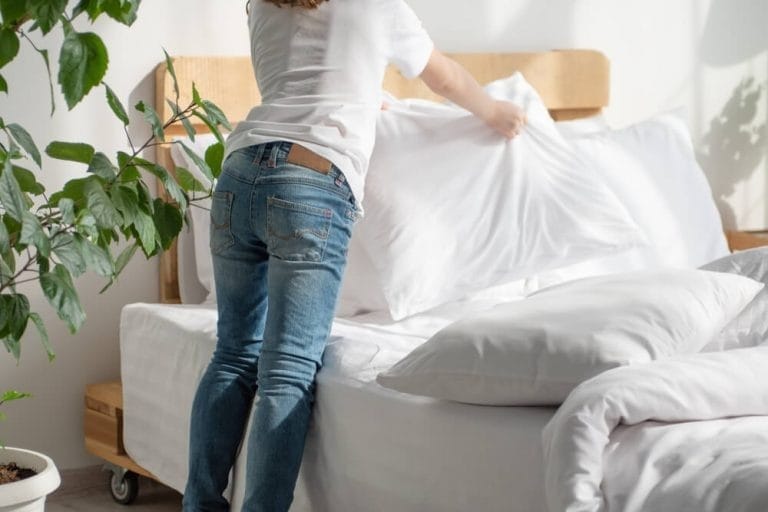
- Arrange furniture and plump up cushions.
- Wash and put away dishes, and check for stains in anything you're about to photograph.
- Vacuum and mop so floors read as clean in a wide shot.
- Clear counters, shelves, and surfaces of clutter that makes rooms look smaller than they are.
- Pack away excess ornaments or books. A little personality is good; too much reads as storage, not staging.
2. Prepare every room before you shoot
Walk through each room and get it camera-ready. Open curtains and blinds in living spaces, and set one or two magazines or a small styling object on the coffee table. In the bathroom, make sure the tub, shower, and sink are spotless, and add folded towels or a candle for a touch of warmth. In the kitchen, clear the counters and line up your essential kitchen amenities neatly. Small staging touches like these are what separate an average Airbnb photo from one that makes guests stop scrolling.
3. Turn on every light, even in daylight
Natural light does a lot of the work in a great Airbnb photo. It adds contrast, depth, and true-to-life color. Open every blind and curtain before you shoot, and if you can, time your shoot for the golden hour just after sunrise or before sunset, when the light is softest and most flattering.
Then turn on the indoor lights too, even during the day. Overhead and lamp lighting fills in the dark corners that natural light alone can't reach, especially in kitchens and bathrooms that get less direct sun. The combination gives guests a clear, accurate view of the space, creates the best lighting for showing it off, and reinforces that it's clean and well-kept.
4. Shoot into a corner, not a wall
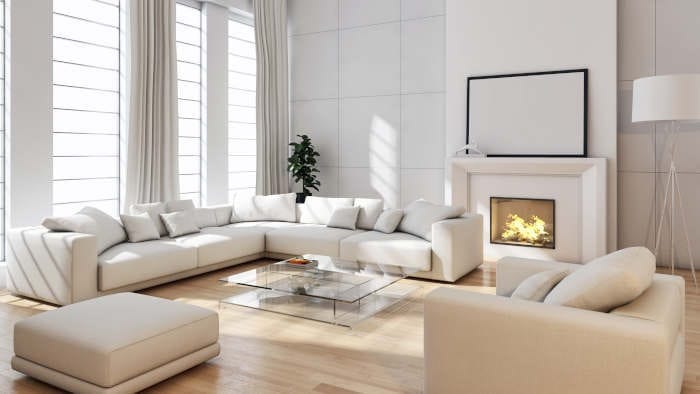
Shooting into a corner rather than straight at a wall adds dimension to a photo and makes a room read larger and more inviting. This applies in every room: aim at the bed in the bedroom, the sofa in the living room, the shower or tub in the bathroom, and the stove or oven in the kitchen. Combine a corner angle with good natural light and you'll get noticeably stronger Airbnb photos without changing any equipment.
5. Don't skip the small details
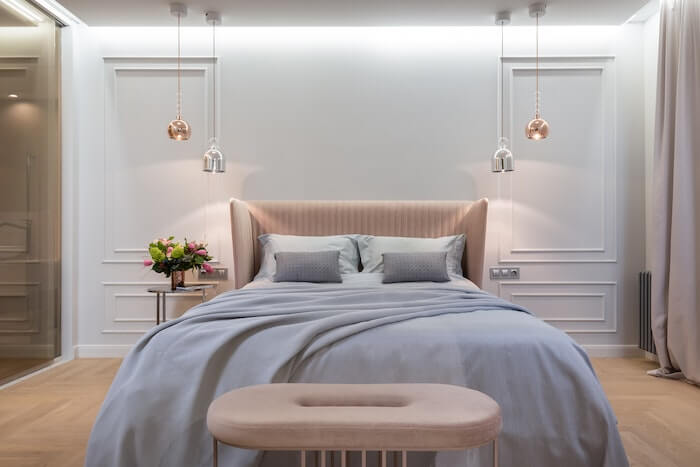
It's easy to focus only on the big-ticket amenities and forget the details that make a space feel lived-in and welcoming. A photo of a well-stocked bookshelf, a veggie garden, or a collection that shows some personality tells guests your place has character, not just square footage. A thoughtful welcome book sitting on the counter is worth a photo of its own, since it signals the kind of host you are before a guest even arrives. These detail shots won't be your cover photo, but they build trust and help guests picture themselves there.
6. Take wide, panoramic shots
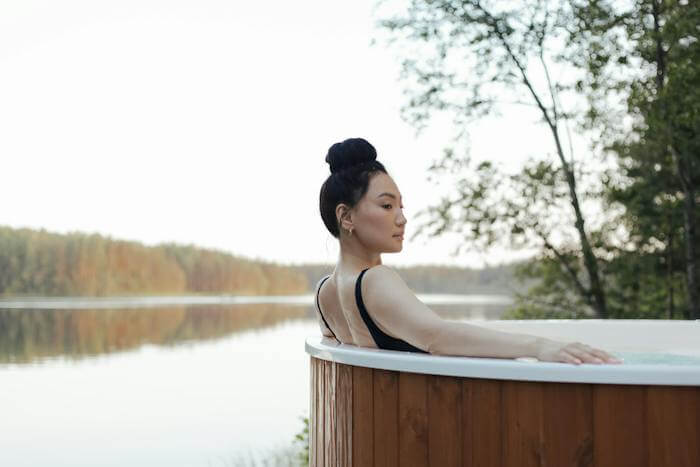
A panoramic shot, or wide-angle shots taken with a wide-angle lens if you have one, is the fastest way to show off an entire room in a single image. It gives guests a realistic sense of scale and builds trust, since it shows you're not hiding anything, unlike other listings that only show tight crops. For outdoor spaces, a vertical shot built around a single focal point, like a hot tub or a fire pit, works well too.
7. Vary your angles, but stay purposeful
A gallery where every photo is shot from the same eye-level angle gets repetitive fast. Mix in a few different perspectives, ceiling-down or floor-up, to add variety. Just make sure every angle still shows off an amenity guests care about. Creative angles should support the listing, not distract from it.
8. Photograph the lifestyle, not just the room
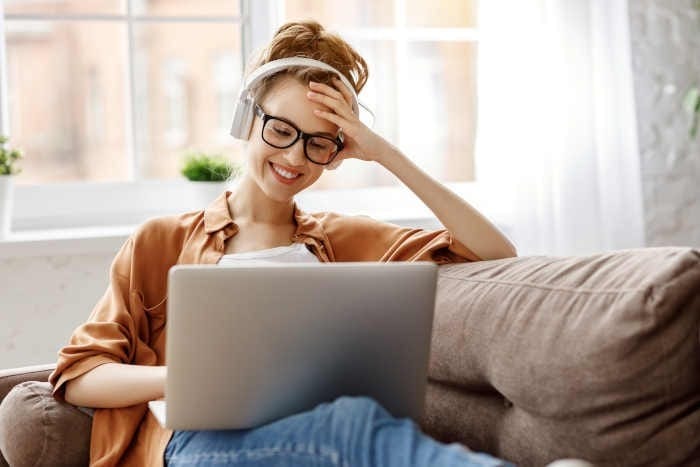
Guests are booking an experience as much as a floor plan. If your rental leans rustic, a copper kettle or a cheeseboard on the counter tells that story. If it's a sleek urban space, a few luxury bathroom essentials reinforce the vibe. If guests come for the outdoors, show the gear you provide for it. Good interior design choices give you more of this kind of photo to work with in the first place. Photos that paint a lifestyle tend to attract the guests who'll enjoy your property most, which also means better reviews.
9. Capture the neighborhood
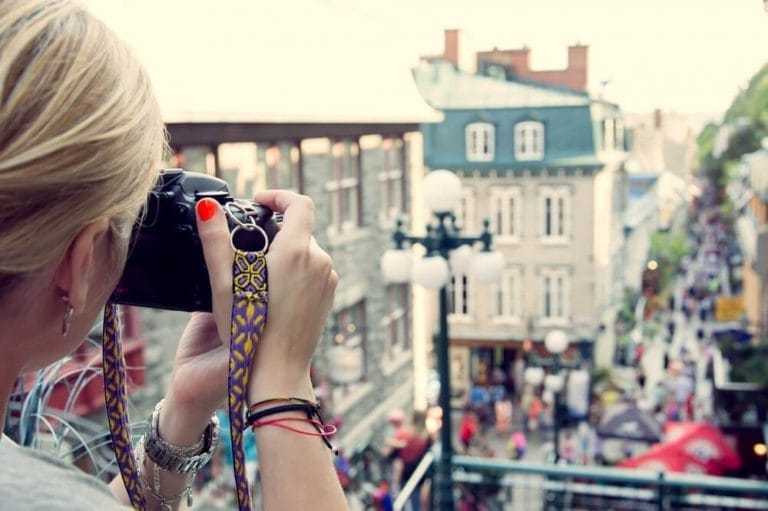
Don't stop at your front door. Guests care almost as much about where they're staying as what they're staying in, so include a few shots of nearby restaurants, parks, or landmarks. A city rental benefits from photos of the street life nearby; a quiet rental benefits from a shot of the park or trail down the road. Spend a little extra time here rather than treating it as an afterthought.
How to Organize Your Airbnb Photo Gallery
Taking great individual photos is only half the job. How you organize and caption them matters just as much for how guests experience your listing.
Group photos by room. Upload them in a logical order rather than at random, so guests can follow the layout of your rental as they scroll. Most hosts start with the kitchen or living room, then move through bedrooms, bathrooms, outdoor space, and finally the neighborhood. If you have one, include a floor plan graphic near the start of the gallery too. It helps potential guests picture the layout in a way that individual room photos can't.
Lead with your strongest shot. Your cover photo is doing the most work of any single image in your listing, since it's what guests see before they've clicked in at all. Pick one standout photo per room to front-load the gallery, then fill in the rest, and use the sequence to showcase your unique amenities early rather than saving them for the end.
Add captions that make your listing stand out
Captions keep a guest's attention as they scroll and give you a second chance to highlight an amenity. Skip generic captions like "bathroom" or "kitchen 1," since the photo already tells guests that. Instead, use the caption to add information the photo can't: the water temperature guests can expect from that walk-in shower, or that the bathtub is deep enough for a proper soak with a book.
Good captions turn a set of detailed photos into a sales pitch, help your listing stand out from other listings in a search, and reinforce the listing optimization work you've already done on your title and description. Guests love a listing that clearly took the time, and captions are one of the easiest ways to show it.
Should You DIY or Hire a Professional Airbnb Photographer?
Once your rental is staged and you know the basics, the real question is who should be behind the camera.
If photography isn't your strength, a professional photographer who specializes in short-term rentals can be worth the cost, especially for a higher-end property where the difference between good and great photos shows up directly in your nightly rate. A professional will also know how to frame a tricky scene, like a small bathroom or an oddly shaped living area, in ways that are hard to get right on your own. Airbnb runs its own
Pro Photography Program, which matches you with a local, vetted photographer who typically delivers 15-25 finished, high quality images. You don't pay upfront: the cost is deducted from an upcoming payout. Separately, Airbnb occasionally emails select hosts a one-time free photography offer to refresh an existing listing's photos, though that offer is invitation-only and isn't something you can request directly.
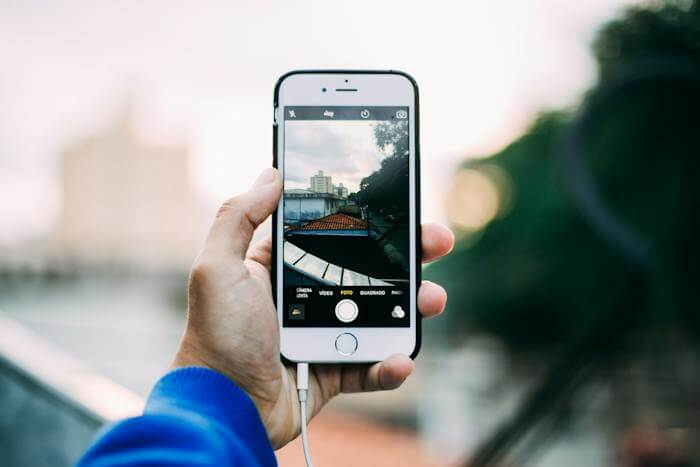
If you'd rather DIY it, a modern smartphone can produce genuinely professional photos and detailed photos of every room, especially once you run them through an editing app. A little practice with framing and location within each room goes further than most hosts expect. A few apps worth knowing:
- VSCO offers strong color and exposure controls along with gridlines for cleaner composition.
- Snapseed, Google's free editing app, covers most of what a paid tool does, including saved presets for consistent editing across your whole gallery.
- Adobe Lightroom for mobile adds a built-in camera plus fine exposure and white-balance control, with a free tier and a paid plan for more advanced edits.
One caution worth flagging: use editing apps to correct lighting, color, and exposure, not to alter what a room actually looks like. Airbnb requires photos to accurately represent your space, and guests who arrive to a room that looks meaningfully different from its listing photos are guests who leave a bad review.
Frequently Asked Questions
How many photos can I upload to my Airbnb listing? Airbnb allows up to 100 photos per listing, but most well-performing listings use 20 to 30. More isn't automatically better; a tightly edited gallery of your best shots outperforms a bloated one.
What are Airbnb's photo size and resolution requirements? Airbnb's baseline is a 3:2 aspect ratio and a minimum resolution of 1024 x 683px, with files ideally under 10MB. Shooting at 1200 x 800px or larger gives you more flexibility when Airbnb crops your photos for different views.
How much do professional Airbnb photos cost? It depends on the route. Airbnb's Pro Photography Program deducts its cost from a future payout rather than charging upfront, and typically delivers 15-25 images. Hiring an independent short-term rental photographer directly varies by market and property size, so it's worth getting a quote local to your listing.
What makes a good Airbnb photo? A good Airbnb photo is bright, well-composed, and shot in natural light with the space clean and staged. It shows a room's true size (often via a corner angle or wide shot) and highlights the details that make your rental distinct, without misrepresenting what guests will find in person.
Why won't my photo upload to Airbnb? Uploads typically fail because a file is too large, below the minimum resolution, or in an unsupported format. Re-export the image as a JPG at or above 1024 x 683px and under about 10MB, then try again.
Great Photos Get Guests In the Door. iGMS Handles the Rest.
Great Airbnb photos earn the click and the booking. What happens after that booking (cleaning turnover, guest messaging, payments, multi-platform calendars) is a separate job, and it's the one that burns out hosts managing more than one listing.
iGMS is built to run that side of your business on autopilot. With iGMS, you can:
- Manage every listing across the top OTAs from a single Channel Manager dashboard.
- Sync your calendar across multiple platforms to eliminate double bookings.
- Reply to every guest from one unified inbox, with automated templates for the messages you send most.
- Schedule and track cleaning tasks through to completion.
- Launch your own direct booking website to cut down on OTA fees.
Once your photos are doing their job, let iGMS handle everything that happens after the booking comes in.
About the Author
Phoebe Gunning is a content writer in the Marketing Department at iGMS. She is passionate about the vacation rental industry, notably helping hosts make the most out of their vacation rental businesses. Some of her hobbies include reading, traveling, and drinking a good cup of coffee.