9 Airbnb Key Exchange Solutions for Easy Guest Check-Ins

A smooth Airbnb key exchange is a cornerstone of a flawless guest experience. Here are 9 airbnb key exchange solutions, from the classic to the fully automated, so you can pick the one that fits your rental.
Key Takeaways
- There's no single "best" airbnb key exchange solution. The right pick depends on your budget, how hands on you want to be, and whether you're managing one listing or a growing portfolio.
- Traditional options like neighbors, cleaners, and professional greeters offer a personal touch, but they depend on someone else's schedule.
- Automated options like lockboxes, smart locks, and key exchange services cost more upfront but free you from being available around the clock.
- Smart locks typically run $250 to $350 per door, while a basic lockbox costs a fraction of that, so match the investment to how many doors you're managing.
- Pairing your key exchange method with vacation rental software like iGMS lets you send check-in instructions, codes, and reminders automatically, no matter how many properties you run.
When your Airbnb is ready for new guests and it's time for them to arrive, one of the first impressions you'll make is through how you welcome them. A hassle-free key exchange process matters more than most hosts expect, since it's often the very first interaction a guest has with your property.
An Airbnb key exchange is simply how a host hands over access, whether that's a physical key, a lockbox code, or a smart lock passcode, so guests can get into the property without the host meeting them in person. It can be as simple as a neighbor holding a spare key or as automated as a smart lock that generates a new code for every reservation.
There are plenty of tools and ways to arrange a seamless Airbnb key handover. Read on to discover the pros and cons of each one, and choose what best suits the safety of your property and your guests.
How Airbnb Key Exchanges Shape the Check-In Experience
When it comes to check-in, a well thought out key exchange solution simplifies the process for both you and your guest:
- Tired travelers choose a time that suits them instead of feeling bound to your schedule.
- You free up that time for other hosting tasks on your to-do list instead of waiting around for each arrival.
- Guests get in without you needing to live nearby or be available 24/7.
Here are 9 of our top picks to make your Airbnb guests' arrival effortless.
9 Convenient Airbnb Key Exchange Options
Different key handover options appeal to different hosting styles and circumstances. Many hosts running short term rentals prefer traditional options, while others lean fully automated.
Different hosts and property managers also choose an option to fit a specific property's needs. Budget conscious hosts tend to prioritize the most affordable solution, while for others, time efficiency or security matters more.
Traditional Key Exchange Options
Standard ways to arrange an Airbnb key exchange usually involve relying on another person, whether that's someone you know or someone you employ. These options require good communication with everyone involved.
Since the person you choose will literally hold the key to a great welcome, building trust with them is essential to making it work.

1. Relying on a Neighbor or Friend
If you have a neighbor or friend who lives near your Airbnb, one of the easiest solutions is asking them to hold a set of keys and manage the handover.
You'll need to arrange a set arrival time with your guest and pass that information along to your neighbor or friend, who will then meet the guest at the agreed time.
Pros
- Affordable. A small thank you gift usually covers it.
- A warm, in person greeting with little travel hassle.
- Your keys stay with someone you trust.
Cons
- Not available 24/7, and they won't appreciate late night arrivals.
- They may tire of welcoming guests multiple times a month in busy seasons.
- You may need a late check-in fee to discourage guests from keeping them waiting.
2. Relying on Your Cleaner
If you already employ a cleaner, a natural option is asking if they're willing to stay long enough to hand over keys.
You can schedule your cleaner's shift to end a few hours before the arrival time so they're not waiting long after finishing their cleaning tasks.
Pros
- Affordable. Just add a slightly higher fee on top of their cleaning rate.
- They already know the property and can show guests around.
Cons
- They may be booked at other properties and unavailable if a guest runs late.
- Coordinating their schedule around every arrival adds complexity.
- A guest could arrive early while your cleaner is still mid-turnover.

3. Arranging With a Professional Dedicated Airbnb Key Holder
A key holder, sometimes called a greeter, can be hired to handle key exchanges professionally. For a payment arranged in advance, they'll meet your guests, hand over the keys, and give them a warm welcome.
Pros
- Reliably on time with a warm welcome, and more flexibility for late arrivals.
Cons
- Expect to pay a relatively high fee, plus a separate charge for maintenance worker access.
- Greeters don't always live nearby, so have a backup plan in case of miscommunication.
4. Arranging With a Front Desk Administrator
If your Airbnb is in an apartment building or gated community, you likely have a front desk administrator. By building a good relationship with them, you may be able to leave keys at the desk for guests to pick up on arrival and drop off at checkout.
Pros
- Often staffed most of the day or 24/7, so guests arrive on their own schedule.
- Affordable, and your keys stay safe and looked after between stays.
Cons
- You'll need safeguards, like a password system, so only booked guests can request keys.
- The administrator won't escort guests to your door, so clear instructions are essential.
5. Arranging With a Local Coffee Shop
A coffee shop or other nearby store can be a convenient key exchange spot, naturally available during business hours. Look for a smaller business within walking distance where you can build a relationship with the owner, get their permission first, and give plenty of notice about arrival and check out times.
Pros
- Available most of the day, some 24/7, and affordable with an occasional thank you gift.
- Supports a local business, and guests often become repeat visitors during their stay.
Cons
- Guests arriving after closing could be stuck without a backup plan.
- A guest privacy risk when multiple staff members have access to your house keys and address.
6. Using the Services of a Third-Party Manager
Professional property management companies take over nearly all aspects of running your Airbnb. It's a premium, all-in-one service where a team handles everything from the welcome process to cleaning management.
This option suits hosts who'd rather hand off the business entirely, even if it means a smaller cut of the profit.
Pros
- Zero headaches around key exchanges. The manager handles communication, check-in logistics, and the handover itself.
- You get a professional welcome experience, since the manager is always available to meet guests and show them around.
- Your keys stay secure between bookings.
Cons
- This is one of the pricier options. Full-service property managers typically charge 18% to 40% of your monthly rental income, depending on the scope of service.
Automated Key Exchange Solutions
The industry has shifted toward automated, digital key exchange methods over the last few years. These solutions are easy to set up and manage, and they typically cost a fraction of professional services over time.
These options don't rely on another person, which makes self-check-in possible, and they're often more secure than traditional handover methods.
7. A Lockbox
A simple but effective solution is the unassuming lockbox, a small, durable container that locks your keys inside and opens with a combination. Before each arrival, you just share the current code.
Lockboxes come in a few styles, including push-button, wheel, and dial mechanisms. Popular options include the Igloohome Smart Keybox 3 (around $180), the Master Lock 5424D Portable Lock Box, and the Kingsley Guard-a-Key Black Realtor's Lockbox.
Pros
- No need for anyone to meet your guests, just the combination.
- A one time purchase that's accessible 24/7 and mounted on site.
Cons
- Share the wrong combination and guests could be stranded.
- An unrotated code can get passed along to people who shouldn't have it.
8. A Smart Lock
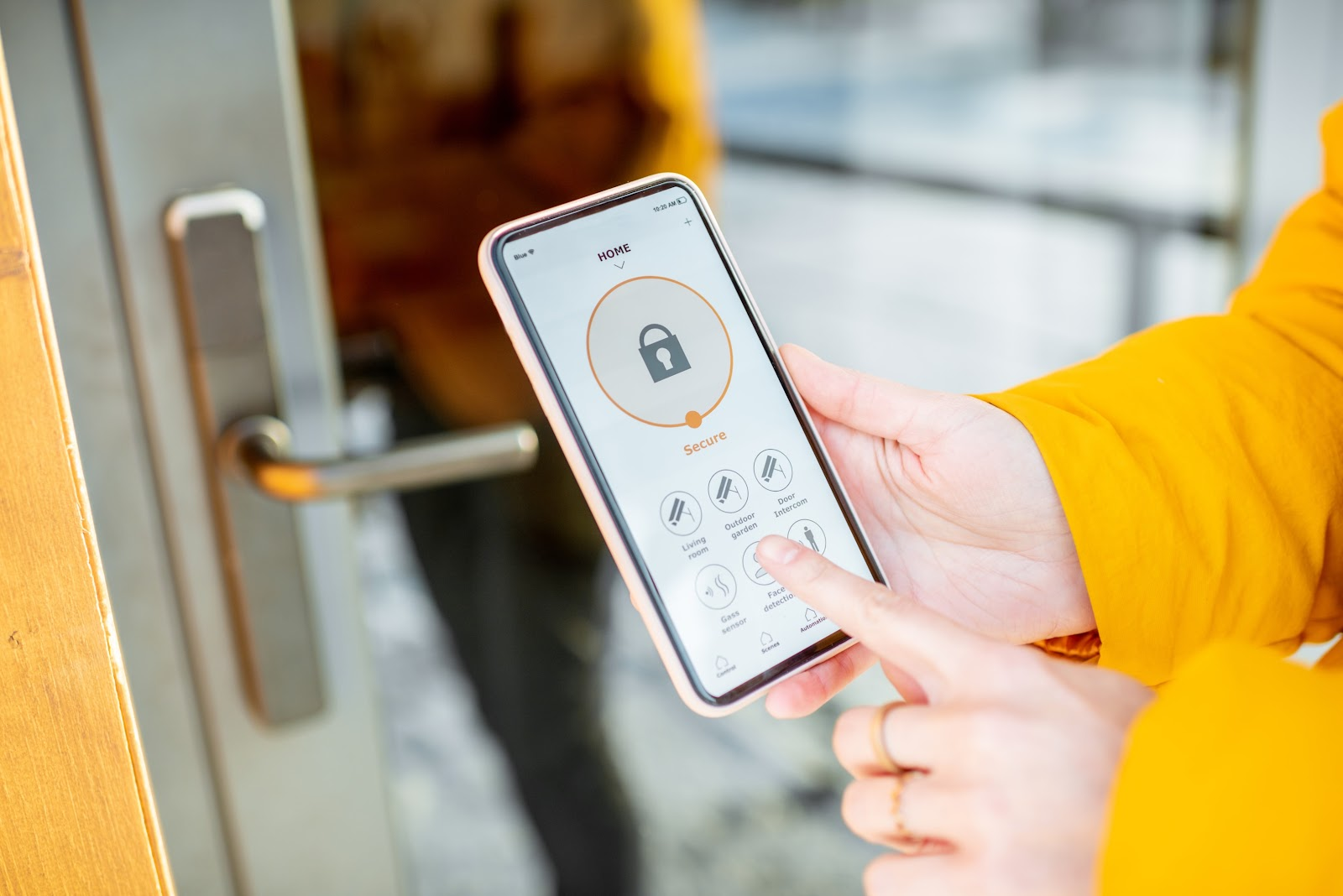
Think of a smart lock as a lockbox gone fully digital. There's no key to hand over at all. The door opens with a passcode you control, managed through an app or web dashboard, so you can set and update codes from your phone or computer.
Popular smart locks for Airbnb hosts
- August Smart Lock Pro + Connect: a Wi-Fi retrofit lock that fits over most existing exterior hardware and deadbolts without replacing them. Home Depot lists it at around $280.
- Yale Assure Lock SL: a touchscreen, keyless deadbolt with Wi-Fi and Bluetooth options, priced at around $330 direct from Yale.
- Schlage Encode: a built-in Wi-Fi smart lock that doesn't need a separate hub, carrying an ANSI/BHMA Grade 1 security rating, the industry's highest residential security grade, and popular with hosts who want fewer devices to manage.
Pros
- No one else needs to be available, and guests check in 24/7.
- You can set a unique code that activates right at check-in and automatically expires at check-out, so you don't have to remember to deactivate access, which makes this one of the more secure options for protecting an airbnb property.
- Most models log entries with a timestamp, so you have an audit trail of exactly when each code was used, and some push a notification straight to your phone the moment a code is entered.
- It's worth confirming a backup entry method (a companion app, a keypad code, or a physical key override, depending on the model) in case the electronics ever fail.
Cons
- Pricier upfront, typically $250 to $350 depending on the model.
- Needs a stable internet connection and Wi-Fi network to work reliably.
9. A Professional Key Exchange Service
A key exchange service sits between traditional handovers and fully automated self-check-in: an accessible drop-off and pick-up point for physical keys, with online tracking of when a key is checked in and out, and sometimes keyless entry automation layered on top.
Pros
- 24/7 availability at most price points, and they manage self-check-in for you.
Cons
- You'll need a service location close to your Airbnb.
There's a wide selection of key exchange services, each with handy features to help automate the key exchange process. These services can go a step further when integrated into vacation rental automation software like iGMS, which lets you manage every part of your rental from one platform. Here's how a couple of our integrated partners work:
Key storage and management services
KeyNest and Keycafe are widely regarded as the most accessible, affordable Airbnb key storage tools. KeyNest runs over 7,000 drop-off and collection points, most open for guests to pick up or drop off keys any time of day, and Keycafe runs hundreds, across Australia, Europe (including major cities like London), Canada, and the US.
Both platforms let you send passcodes to guests automatically and track exactly when a key is checked out and back in, so you always know where your keys are.
Key automation services
Lynx offers key automation for vacation rentals, syncing smart locks and access devices with your booking calendar so guests get keyless entry without you lifting a finger for each arrival.
Managing Key Exchanges Across Multiple Properties
A single lockbox or a favor from a neighbor works fine for a single property, but it gets harder once you're juggling check-ins across an entire portfolio.
Property managers running multiple properties usually standardize on one automated method, smart locks or a key exchange service, so remote property management doesn't mean improvising a different handoff for every address and every landlord's rules. Building type and local regulations often decide which method is even an option: a gated community or HOA may restrict exterior hardware like smart locks or dictate how a lockbox can be mounted, while a leased rental unit may limit what a host can install on the door at all. The priority is consistency: the same system across the portfolio means less setup work per property. Many property managers also pair the smart lock with a noise monitoring device like Minut or NoiseAware, which sends an alert whenever noise levels cross a set threshold, so they can resolve complaints remotely instead of being physically present at every property they manage. Airbnb permits these devices only under specific conditions: they can measure decibel levels but can't record audio, they must be disclosed in the listing, and they can't be placed in bedrooms, bathrooms, or other sleeping areas.
Best Practices for Coordinating Airbnb Key Exchanges and Check-Ins
The key exchange process involves more than just handing over a set of keys. A flawless check-in experience takes planning and clear communication. Here are a few tips to get it right.
Send a Message With Comprehensive Check-in Instructions
Preparing comprehensive check-in guidelines and sending them to guests well before their stay is an easy way to create a great check-in experience.
It gives guests a clear picture of what they need to know about the property on arrival, and it shows them you've planned ahead for their visit.
Make sure to include:
- The address of your Airbnb (or a location pin, if you can send it to their phone).
- Directions to the lockbox, if you're using one.
- Passcodes for any lockboxes, smart locks, doors, or gates.
- Your contact information, in case anything comes up.
Use Pictures to Illustrate the Check-in Process
A picture is worth a thousand words, especially for self-check-in. Add photos of your Airbnb and of each step in the check-in process. This eliminates having to describe what something looks like. Instead of describing where your lockbox is mounted, just include a photo of it.
Pictures are easier to follow and cut down on miscommunication. The less guests have to decipher, the smoother the process goes.
Rotate Codes Between Stays
Whether you're using a lockbox or a smart lock, treat the code itself as something that needs regular upkeep, not a one-time setup. Rotating the code after every checkout, rather than reusing the same one for months, keeps a previous guest (or anyone they shared it with) from walking back in later.
Set Up a Convenient Automated Process
Vacation rental software like iGMS saves time and keeps things simple. It also gives you one central place to manage the check-in journey from start to finish, including automated messages with check-in instructions, codes, and reminders timed to each guest's arrival.
It keeps your calendar synced across every channel, Airbnb, Vrbo, and Booking.com, so availability never falls out of step between them. iGMS also supports direct bookings, so repeat guests can rebook straight through you and skip the OTA commission entirely, and good vacation rental software can pull financial reports across your whole portfolio too, so you're not tracking performance by hand.

Frequently Asked Questions
Which key exchange option is best for a single rental property?
A lockbox or smart lock usually offers the best balance of cost and convenience: 24/7 self-check-in without the ongoing fees of a key holder or key exchange service.
How does a service like KeyNest or Keycafe work?
You drop a labeled key at a nearby partner location, like a local shop or cafe. The guest picks it up at check-in with a code you send them, and the platform tracks exactly when it's checked out and returned.
Is it legal to make copies of rental keys for guests or key exchange services?
In most areas, yes. Some apartment buildings and HOAs restrict key duplication for security reasons, so check your lease or building rules before copying keys for a lockbox or handoff service.
What happens if a guest loses their lockbox code or smart lock passcode?
Send codes in writing, not just verbally, as part of your check-in instructions, and keep your contact information easy to find. With a smart lock, you can generate a new code remotely in seconds if needed.
Final Thoughts
When it comes to a flawless check-in process, the small details matter most. They add up to either a great or a frustrating first impression, and your Airbnb key exchange process is a big part of that.
There's no one size fits all answer here. The right airbnb key exchange solution depends on your budget, how hands on you want to be, and how many properties you're managing. Whether you land on a traditional or automated option, success comes down to how well you plan and communicate with your guests, and juggling that manually only gets harder as your rental business grows. iGMS brings your key exchange process together with guest messaging and task automation in one platform, so nothing falls through the cracks between bookings.
About the Author
Callan Riddles is the Content and Social Media Specialist at iGMS. Callan has a passion for finding new ways to help vacation rental businesses thrive. In her free time, she loves to travel, read, and experience all the new things life has to offer.